The Famine Stela Supports Joseph Smith’s Book of Abraham
The Category Error of the Skeptic: Why Joseph Smith’s Book of Abraham Is a Masterclass in Ancient Syncretism
If you’ve ever spent time reading skeptical critiques of Latter-day Saint scripture, you know the routine. A critic holds up Facsimile 1 or Facsimile 2 from the Book of Abraham, points to a modern Egyptological textbook, and declares with triumph:
“Joseph Smith got it all wrong! An Egyptologist looks at this image and sees Osiris, Anubis, Khnum, or Horus—not Abraham, Yahweh, or the idolatrous priest of Elkenah!”
It sounds like a slam dunk on the surface. But beneath that confident assertion lies a fundamental, glaring category error. It relies on a tactic that can only be described as bad logic—and, quite frankly, hypocrisy.
The skeptic’s critique rests on a flawed assumption: that Joseph Smith was attempting to translate these ancient vignettes according to native, pagan Egyptian priests. But native Egyptian priests didn’t believe in Abraham, Joseph, Jacob, or Moses! They worshipped their own pantheon.
Joseph Smith wasn’t presenting a translation of pagan Egyptian mythology. He was presenting a translation of a Jewish reinterpretation of Egyptian iconography.
To demand that a Jewish text composed or adapted in an Egyptian milieu conform strictly to traditional Egyptian polytheism misses how ancient cultures interacted, borrowed, and re-contextualized each other’s art and sacred stories.
1. The Clash of Civilizations: Interpretatio Judaica
In the ancient Mediterranean—particularly during the Hellenistic and Ptolemaic periods when the Joseph Smith Papyri were produced (c. 300 BC – 100 AD)—cultures did not live in isolated silos. They engaged constantly in a process known as syncretism: mapping their own theological concepts onto the visual and literary language of neighboring empires.
When the Greeks encountered Egypt, they practiced Interpretatio Graeca. The 500 BC Greek historian Herodotus and his contemporaries looked at Ra and called him Zeus; they looked at Osiris and called him Dionysus; they looked at Thoth and called him Hermes. Do Egyptologists accuse Herodotus of “failing a translation test” because a native priest of Amun-Ra wouldn’t use the name Zeus? Of course not. That was how ancient cross-cultural communication worked.
The Jewish diaspora in Egypt—which thrived in places like Alexandria, Memphis, and Elephantine—practiced their own version: Interpretatio Judaica. They took the vibrant visual vocabulary of Egyptian art and re-read it through the lens of their own covenant history.
The Example of Josephus and Manetho
Look at the Jewish historian Flavius Josephus in his famous work Against Apion. Josephus quotes Manetho, a 3rd-century BC Egyptian priest who wrote a history of Egypt. Manetho described a group of “polluted people” and shepherds (the Hyksos) who occupied Egypt and were eventually expelled under Pharaoh Ahmose.
How does Josephus handle this native Egyptian history? He completely reinterprets it! Josephus asserts that Manetho’s “Hyksos” and “polluted people” were actually Moses and the Children of Israel.
If you asked Manetho himself, he would have vehemently disagreed with Josephus. Manetho would say, “Ahmose had nothing to do with your God or your prophet Moses!” But Josephus would reply, “This is our history hidden inside your records.”
It was a collision of two distinct cultural frameworks claiming the same historical memory. Josephus wasn’t “failing to read Egyptian correctly”—he was intentionally reclaiming the narrative through a Jewish lens. Josephus understood that the Hyksos were Asiatic nomads who came to Egypt from the region of Israel and almost certainly had a shared heritage of Levantine peoples like himself. Modern scientists and theologians vehemently argue whether Josephus’ re-interpretation of Egyptian history is entirely correct, or whether Moses, Joseph or Abraham were actual historical characters hidden within Egyptian names and history, but this very debate underlines the absurdity of the arguments many Christians make against Joseph Smith and his similar re-interpretation of ancient Egyptian/Jewish syncretic ideas.
2. Deep Dive: The Famine Stela and the Joseph Parallel
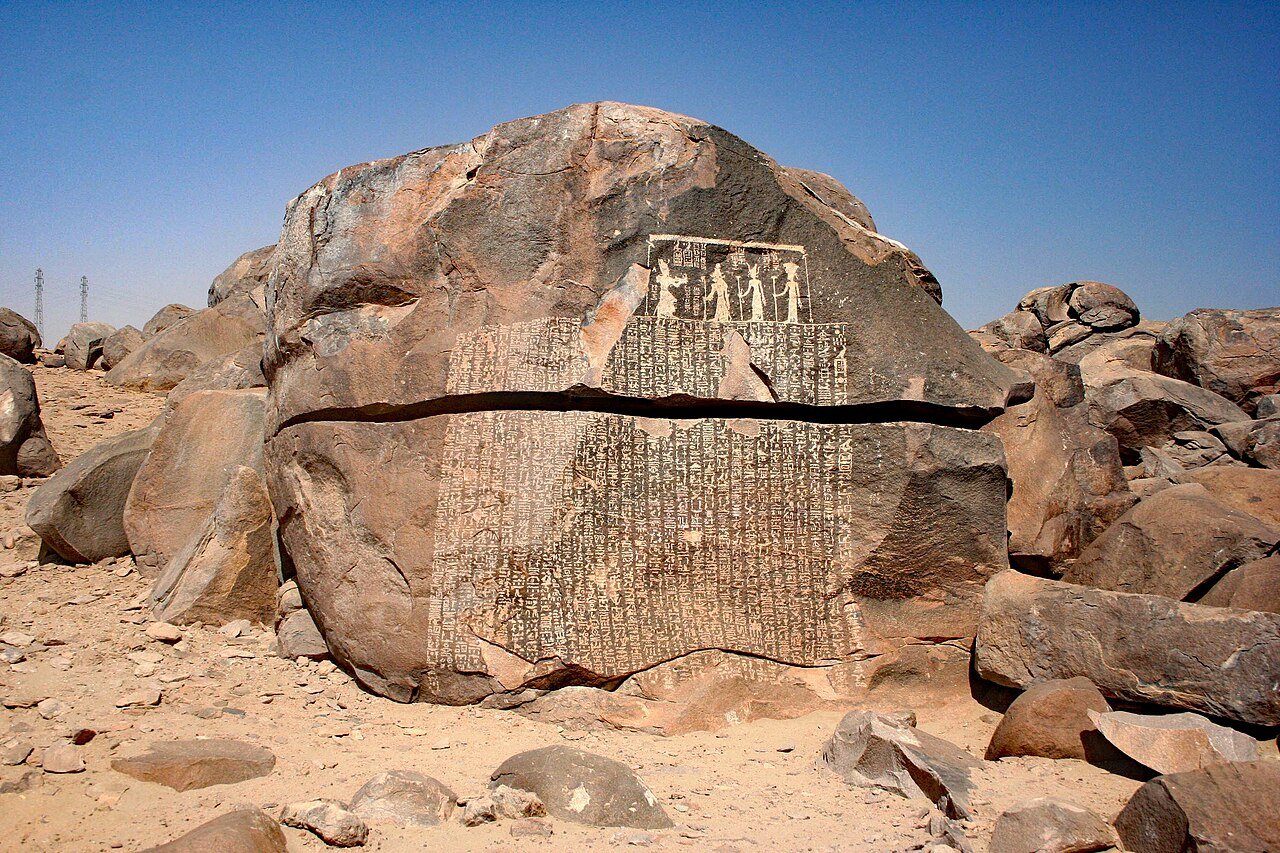
To see how this works in practice, consider one of the most famous inscriptions in Egypt: the Famine Stela, located on Sehel Island near Elephantine.
           THE TWO READINGS OF THE FAMINE STELA

   Native Egyptian / Egyptologist       Jewish Diaspora Reader
 ┌────────────────────────────────┐   ┌────────────────────────────────┐
 │ • King Djoser                  │   │ • Pharaoh of Egypt             │
 │ • Priest/Advisor Imhotep       │   │ • Patriarch Joseph             │
 │ • 7-Year Nile Drought          │   │ • 7-Year Biblical Famine       │
 │ • Appeal to Khnum / Hapi       │   │ • Power of Yahweh / True God   │
 └────────────────────────────────┘   └────────────────────────────────┘
Carved during the Ptolemaic period (the exact same era as the Joseph Smith Papyri), the Famine Stela tells a story set in the distant Old Kingdom reign of Pharaoh Djoser:
- Egypt suffers under a terrible seven-year drought and famine.
- The Pharaoh is distressed and consults his brilliant advisor and high lector priest, Imhotep.
- Imhotep investigates the sacred texts, goes to the temple, receives a divine dream, and advises the King on how to end the famine by appealing to the god Khnum.
Two Interpretations, One Artifact
Now, how do we read this artifact?
- The Western Egyptologist’s View: “This is a Ptolemaic priestly decree about Pharaoh Djoser asking his priest Imhotep to consult the Egyptian deity Khnum at Elephantine to restore the Nile inundation.”\
- The Ancient Jew’s View: Elephantine was home to a massive, well-documented Jewish colony. Imagine a Jewish scribe or reader in Upper Egypt encountering this story of a 7-year famine, a wise royal court advisor who interprets divine secrets, and a pharaoh seeking relief. To a Jew, this is undeniably the story of Joseph interpreting Pharaoh’s dream in Genesis 41!
An ancient Jew looking at that motif wouldn’t see pagan priests doing pagan rituals; they would see the hand of Yahweh working through Joseph to save Egypt from starvation.
Both interpretations exist simultaneously within their respective cultural frameworks. The native Egyptian priest saw Imhotep and Khnum. The Jewish reader saw Joseph and Yahweh.
Yet, when Joseph Smith provides an interpretation of Egyptian facsimiles that reflects this exact Jewish recontextualization, the Christian skeptic steps in and shouts: “No! You can’t do that! That’s not Joseph, that’s Imhotep! That’s not Yahweh, that’s Khnum!”
That is hypocritical. It demands that an ancient Jewish text conform to 19th-century pagan Egyptian orthodoxy, while completely ignoring the fact that these same secular Egyptologists would likely deny the very existence of Abraham, Joseph and Moses within Egyptian iconography.
[TO DO: add both a summary and full interpretation of the famine stela. Make a case for the fairly obvious fact that the “people of Khnum” are almost certainly Israelites (given the Aramaic Elephantine Papyri), which suggests that Jewish Egptians saw Khnum as Yhwh or the God of Israel. Talk about the Imhotep cult figures found in Jewish/Pheonician colonies of Spain and how these also suggest the Jews saw Imhotep and Joseph. Explain how Khnum is the ‘Ba’ of Osiris (ba), ram-headed Khnum was viewed as the living ba (soul) of several high-ranking creator and underworld gods, including Osiris and Geb) and Thus Joseph’s interpretation of what other Egyptologist call Osiris is spot on.]
3. The Proof in the Papyri: The Greek Magical Papyri (PGM)
Is there hard archaeological proof that Jews in Egypt actually took native Egyptian visual images, hypocephali, and funerary motifs and forced them into Jewish cultural paradigms?
Yes—in abundance. The prime evidence lies in the Greek Magical Papyri (PGM) and related syncretic texts from Hellenistic Egypt.
When scholars examine the PGM, they find Egyptian funerary drawings, Osiris vignettes, and hypocephali wrapped inside prayers that invoke:
- IAO (Yahweh)
- Sabaoth (Lord of Hosts)
- Adonai
- The God of Abraham, Isaac, and Jacob
- Moses the Prophet
In these ancient papyri, Jewish and Greco-Jewish scribes routinely took traditional Egyptian iconography—drawings of Egyptian gods sitting on thrones, hypocephali representing the cosmos, or figures on lion-couches—and repurposed them. A drawing that originally depicted Anubis embalming Osiris in native tradition was re-labeled or re-understood by Jewish syncretists as an altar of sacrifice involving Abraham or Isaac.
  TRADITIONAL EGYPTIAN           GRECO-JEWISH SYNCRETISM
   PAGAN ICONOGRAPHY               (PGM / HELLENISTIC)
┌──────────────────────┐        ┌──────────────────────┐
│  Anubis / Osiris     │  ───►  │  Abraham / Jehovah   │
│  Hypocephalus / Ra   │  ───►  │  Cosmos / Kolob      │
│  Pagan Funerary Art  │  ───►  │  Sacred Covenant     │
└──────────────────────┘        └──────────────────────┘
This wasn’t a “mistake.” It was a deliberate, culturally ubiquitous practice in late-period Egypt. Scribes appropriated the visual art of the dominant culture to teach their own theology.
4. Joseph Smith and the Restored Visual Vocabulary
When Joseph Smith published the Book of Abraham and its accompanying facsimiles, he provided explanations for the figures:
- Facsimile 1: An altar where a priest attempts to offer Abraham, with the Lord’s angel intervening.
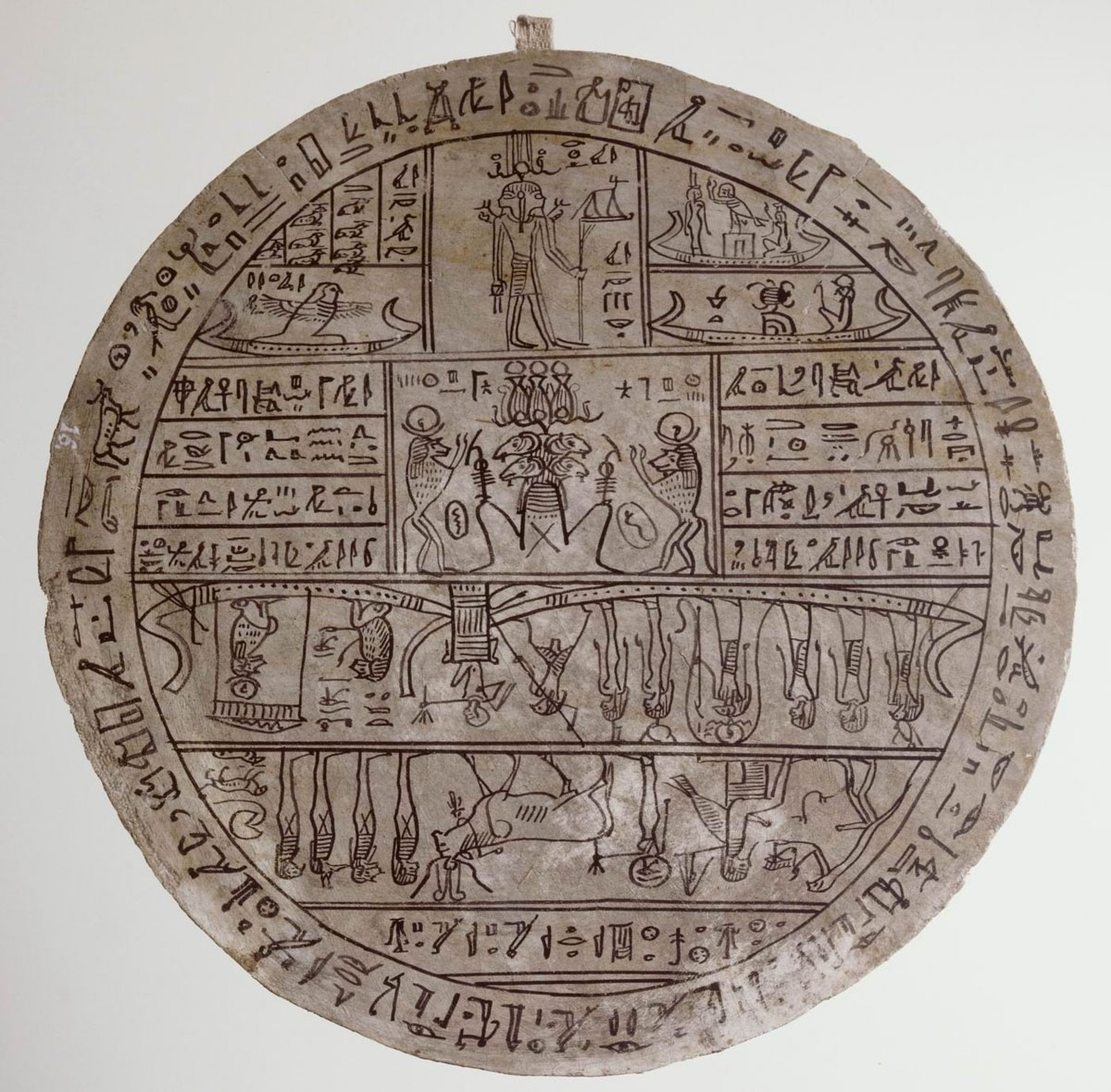
- Facsimile 2 (The Hypocephalus): A representation of the celestial kingdom, key astronomical principles (including Kolob), and divine priesthood keys.
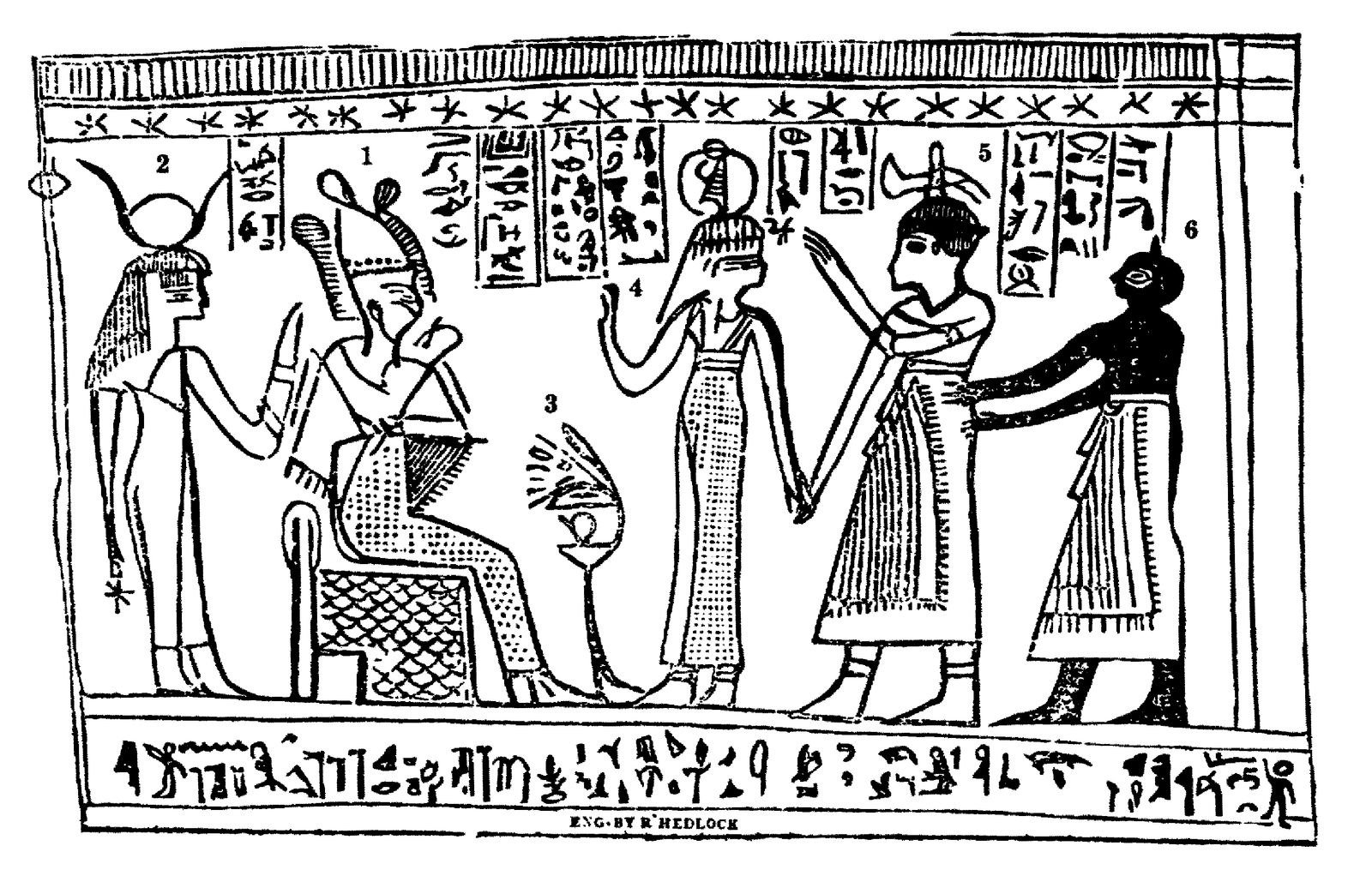
- Facsimile 3: Abraham sitting upon Pharaoh’s throne teaching principles of astronomy to the Egyptian court.
A 21st-century secular Egyptologist looks at Facsimile 2 and says, “This is a standard Egyptian hypocephalus meant to keep the deceased warm in the tomb.”
To which the student of ancient history should respond: “Of course that’s what a pagan Egyptian would say!”
  THE SKEPTICAL FALLACY vs. HISTORICAL REALITY

  Skeptic's Flawed Assumption:
  [Egyptian Artifact] ──► MUST EQUAL ──► Native Pagan Egyptian Religion

  Historical & Restoration Reality:
  [Egyptian Artifact] ──► RE-READ VIA ──► Jewish / Patriarchal Context (Book of Abraham)
Joseph Smith didn’t claim to restore what an ancient idolater in Thebes thought about Facsimile 2. He restored how Jews believed Abraham and his Jewish descendants adapted and re-interpreted Egyptian visual motifs to teach covenant truths.
If a Jewish scribe in 200 BC took an Egyptian hypocephalus and assigned its central figure to represent God (instead of Osiris or Ra) sitting on His throne revealing the stars to Abraham, that scribe was doing the exact same thing Joseph Smith revealed in 1835.
Calling Out the hypocrisy
The next time a critic tries to dismiss the Book of Abraham by comparing Joseph Smith’s explanations to a standard Egyptology dictionary, recognize the sleight of hand being played.
- They ignore ancient context: They pretend that ancient iconography had one rigid, immutable meaning across all cultures, ignoring Interpretatio Judaica, Josephus, and the Greek Magical Papyri.
- They misframe the claim: They act as if Joseph Smith claimed to be a 19th-century secular linguist decoding pagan theology, rather than a prophet restoring a patriarch’s text preserved and transmitted through a Jewish-Egyptian world.
- They enforce a double standard: They allow ancient Greek, Roman, and Jewish authors to syncretize and reinterpret foreign art, but call it “fraud” when the same phenomenon appears in Latter-day Saint scripture.
It’s bad logic. It’s hypocrisy.
When you understand how ancient texts were adapted, transmitted, and re-read across cultural boundaries, the Book of Abraham’s facsimiles don’t look like a 19th-century blunder at all. They look remarkably, strikingly, and authentically ancient.