What is the Largest & Tallest Pyramid in Mesoamerica?
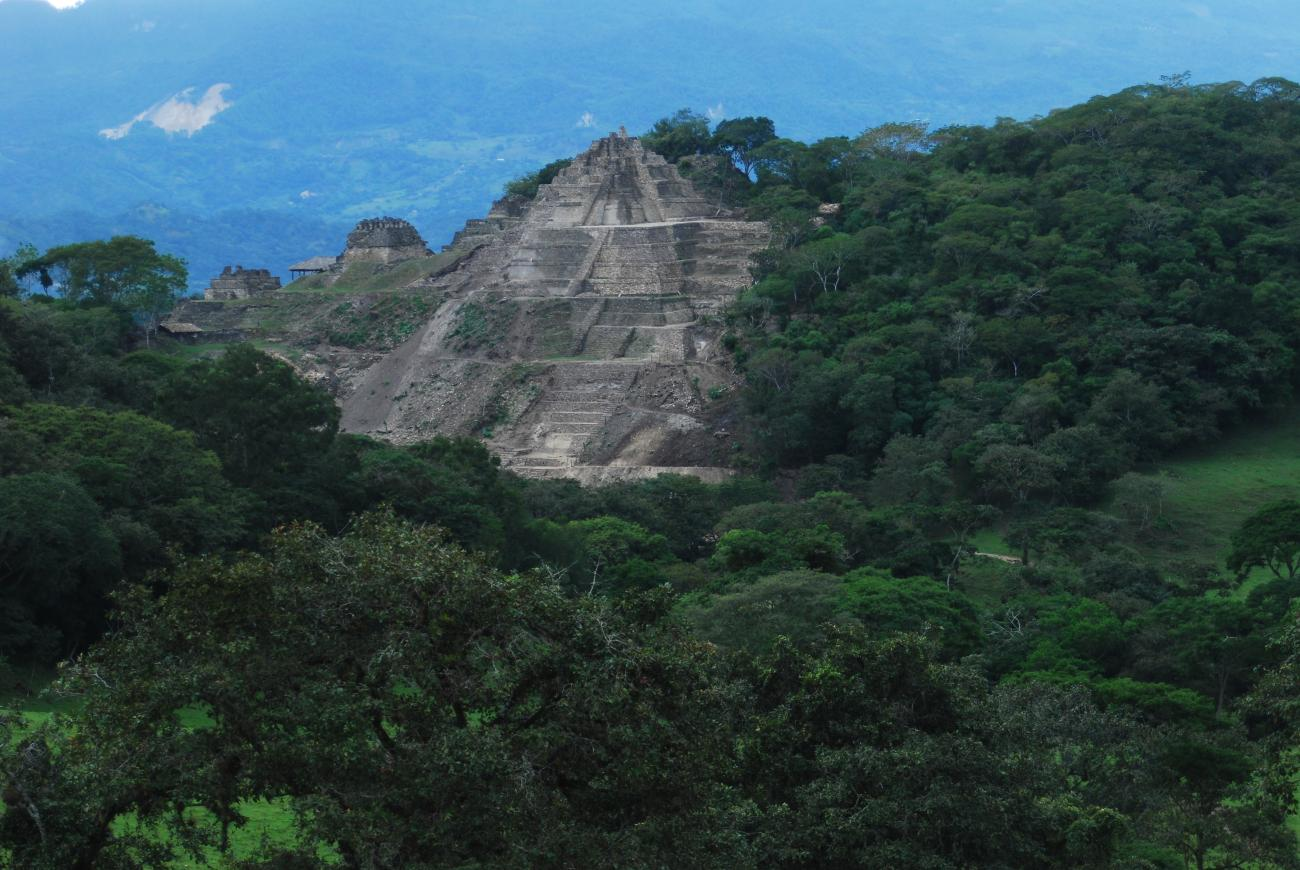
The difficulty in ranking the world’s great pyramids stems largely from the “hidden” labor and geological shortcuts utilized by ancient engineers. While a structure like the Great Pyramid of Giza is composed entirely of quarried stone transported to a site, many North American giants, such as Tonina in Mexico, are essentially “sculpted” hills. By terraforming an existing limestone ridge into a series of seven massive terraces, the Maya created a towering acropolis that reaches higher than almost any other in the Americas. However, because much of its internal mass is a natural hill rather than transported material, purists often debate whether its height should be compared to “true” pyramids built entirely from scratch through the sheer manual labor of carrying basketloads of earth or stone.
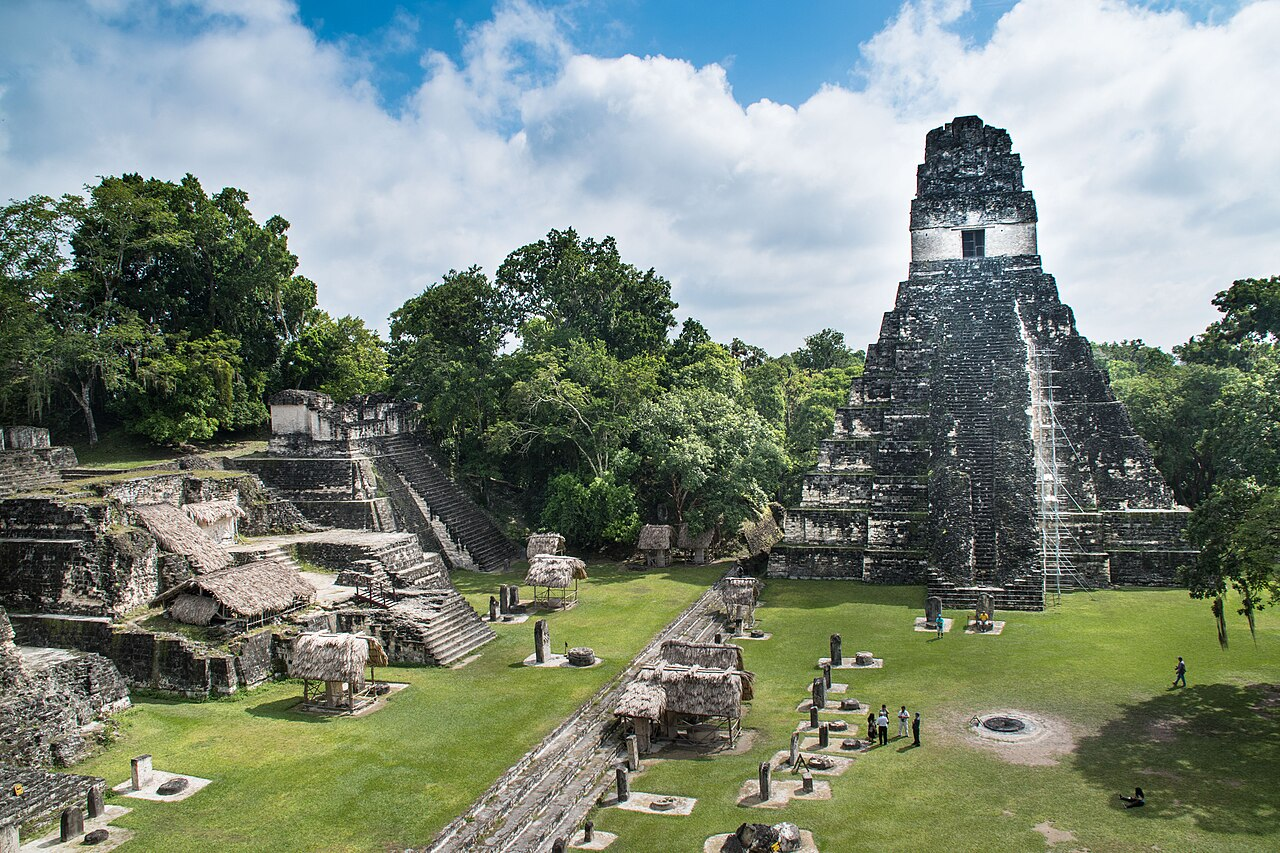
Architectural “completeness” also skews our modern perspective of height and volume. Most Mesoamerican pyramids were not intended to end at their stone summits; they were pedestals for sanctuaries or cellae. At sites like Teotihuacán, evidence suggests that the massive Pyramid of the Sun once supported a colossal temple made of wood and thatch. Because these organic materials perished centuries ago, the structure appears shorter today than it was in its prime. In contrast, Mayan temples like those at Tikal feature heavy stone sanctuaries topped with massive roof combs. While these stone structures survive, a pyramid with a vanished 40-foot wooden temple might have originally looked far more imposing than a smaller stone-topped contemporary that we see today.
Finally, the distinction between a “structure” and a “platform” creates a counting nightmare for historians. Many pyramids sit on top of massive artificial terraces that cover several city blocks—as seen with La Danta in Guatemala or the Great Pyramid of Cholula. If one includes the base platform as part of the pyramid’s height, the structure becomes a world-record breaker; if one counts only the final steep ascent, it appears much smaller. This lack of a standardized “baseline” means that any list of the tallest pyramids is as much a matter of archaeological definition as it is of physical measurement.
| PYRAMID Name | SITE NAME | PYRAMID Height (ft) | BASE Height (ft) | Cella Height (ft) | BASE Dimensions (ft) | VOLUME (cu ft) | NOTES |
|---|---|---|---|---|---|---|---|
| Khufu Pyramid | Giza Egypt | 481 ft | 0 | 0 | 755 x 755 ft | 91,636,272 | Mesoamerican pyramids can’t compare with Giza heights. |
| Tonina Acropolis | Tonina, Mexico | 241 | 241 ft | 25-30 ft | 1,050 x 1,050 (est) | ~2,500,000 | Built from a natural hillside; recently confirmed as one of the tallest. |
| La Danta | El Mirador, Guatemala | 236 | 33-66 ft | 25-30 ft | 1,017 x 1,935 | 98,881,000 | Massive base platform; often cited as the largest by total volume in the world. |
| Great Pyramid | Cholula, Mexico | 217 | 0 | 0 | 1,480 x 1,480 | 157,150,000 | Largest base area of any pyramid; total volume exceeds Giza. |
| Pyramid of the Sun | Teotihuacan, Mexico | 216 | 0 | 0 | 738 x 738 | 41,495,000 | The largest structure in the city of Teotihuacán. |
| Tikal Temple IV | Tikal, Guatemala | 212 | 0 | ~40 ft | 192 x 146 | 6,710,000 | Tallest “classic” Maya temple with its characteristic roof comb. |
| Calakmul Str. II | Calakmul, Mexico | 180 | 0 | ~15 ft | 460 x 460 | ~3,500,000 | Largest building in the powerful city-state of Calakmul. |
| Temple of Great Jaguar | Tikal, Guatemala | 154 | 0 | ~30 ft | 123 x 135 | ~1,200,000 | Also known as Temple I; iconic Petén-style pyramid. |
| Pyramid of the Moon | Teotihuacan, Mexico | 141 | 0 | 482 x 426 | ~7,000,000 | Built at the north end of the Avenue of the Dead. | |
| Nohoch Mul | Coba, Mexico | 137 | 0 | ~12 ft | ~150 x 150 | ~1,000,000 | Tallest pyramid on the Yucatán Peninsula. |
| Pyramid of Magician | Uxmal, Mexico | 115 | 0 | ? | 227 x 162 | ~1,500,000 | Unique elliptical base and Puuc-style architecture. |
| Lamanai High Temple | Lamanai, Belize | 108 | 0 | ~10 ft | ~170 x 170 | ~800,000 | Tallest temple in Belize; offers views over the New River Lagoon. |
| Becan Edificio IX | Becan, Mexico | 105 | 0 | ? | ~130 x 130 | ~600,000 | The highest building in the Chenes-style site of Becan. |
| Monks Mound | Cahokia, USA | 100 | 30 (Terrace) | 0 | 1,037 x 790 | 22,000,000 | Largest prehistoric earthwork in the Americas; 100% man-made. |
| El Castillo | Chichen Itza, Mexico | 98 | 0 | ~18 ft | 181 x 181 | ~1,100,000 | Famous for the equinox shadow of the feathered serpent. |
| Edzna Five-Story Bldg | Edzna, Mexico | 94 | 0 | ? | ~195 x 195 | ~750,000 | Combines a residential palace with a pyramid temple. |
| Temple of Inscriptions | Palenque, Mexico | 89 | 0 | ? | 197 x 139 | ~1,150,000 | Funerary monument for King Pakal the Great. |
| Temple of the Cross | Palenque, Mexico | 82 | 0 | ? | ~100 x 100 | ~350,000 | One of the Group of the Cross structures at Palenque. |
| Altun Ha Temple | Altun Ha, Belize | 54 | 0 | ? | ~120 x 120 | ~200,000 | Formally the Temple of the Masonry Altars. |
| Etzna Temple Masks | Edzna, Mexico | 18 | 0 | ? | 90 x 54 | ~30,000 | Smaller temple noted for its giant stucco masks. |
| El Tajin Niches | El Tajin, Mexico | 60 | 0 | ? | 115 x 115 | ~300,000 | Unique construction with 365 niches representing days of the year. |
| Copan Temple 16 | Copan, Honduras | 66 | 0 | ? | ~140 x 140 | ~400,000 | The tallest building on the Copan Acropolis. |
| Tikal Temple II | Tikal, Guatemala | 125 | 0 | ? | 123 x 135 | ~800,000 | Located directly across the Great Plaza from Temple I. |
| Cahal Pech Temple | Cahal Pech, Belize | 77 | 0 | ? | ~80 x 80 | ~150,000 | Dominant structure in the central acropolis. |
| Xunantunich Castillo | Xunantunich, Belize | 130 | 0 | ~20 ft | ~150 x 150 | ~1,000,000 | Notable for the massive friezes on its upper levels. |
| Kinich Kakmo | Izamal, Yucatan, Mex. | 111-118 feet | 33-42 ft | 0 | 656 ft × 590 ft | ~24,720,266 | the largest structure on the Yucatán Peninsula by volume. |
| Monte Alban N. Plat. | Monte Alban, Mexico | 131 | 50 | 0 | 984 x 656 | ~10,000,000 | Technically a massive platform base for several temples. |
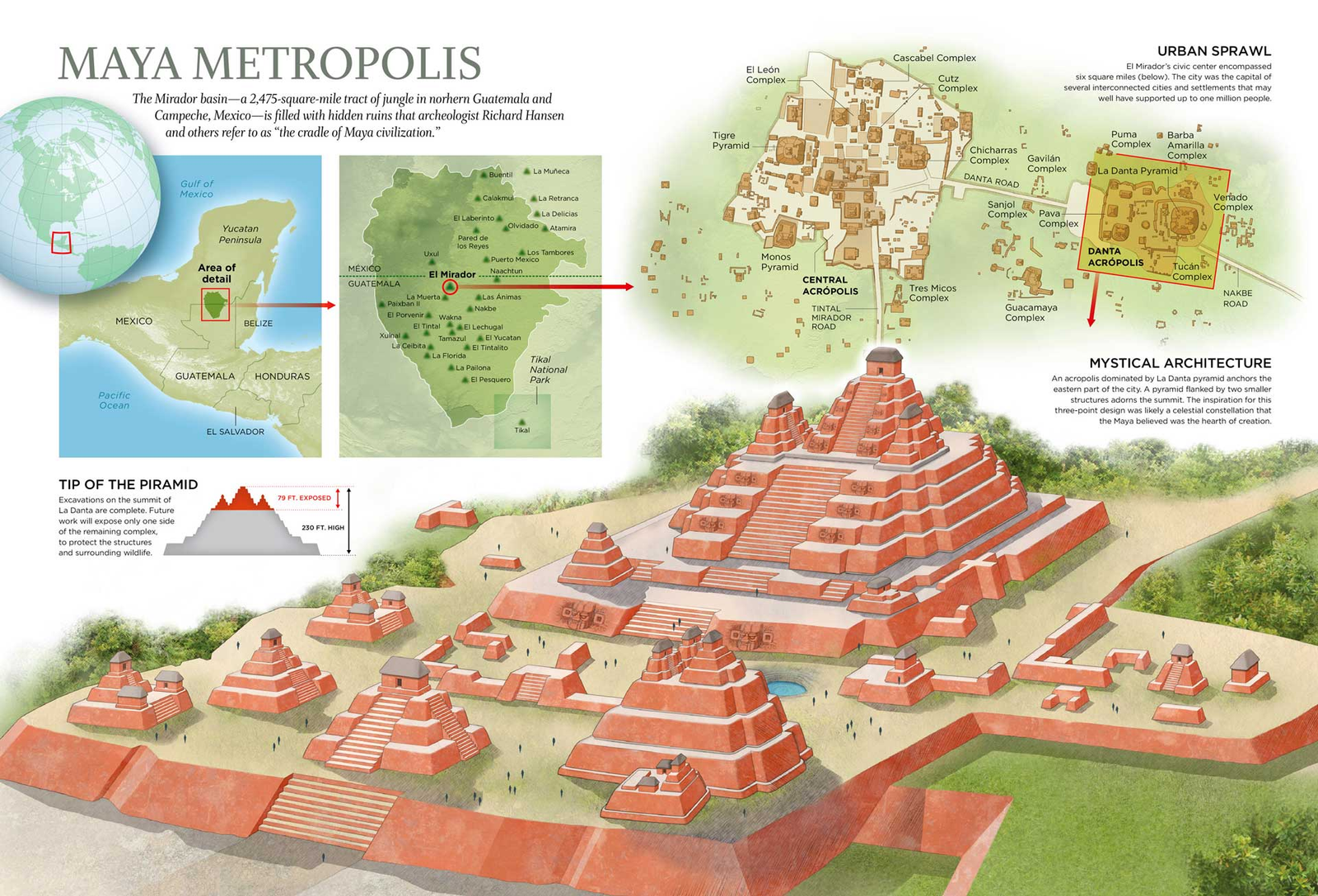
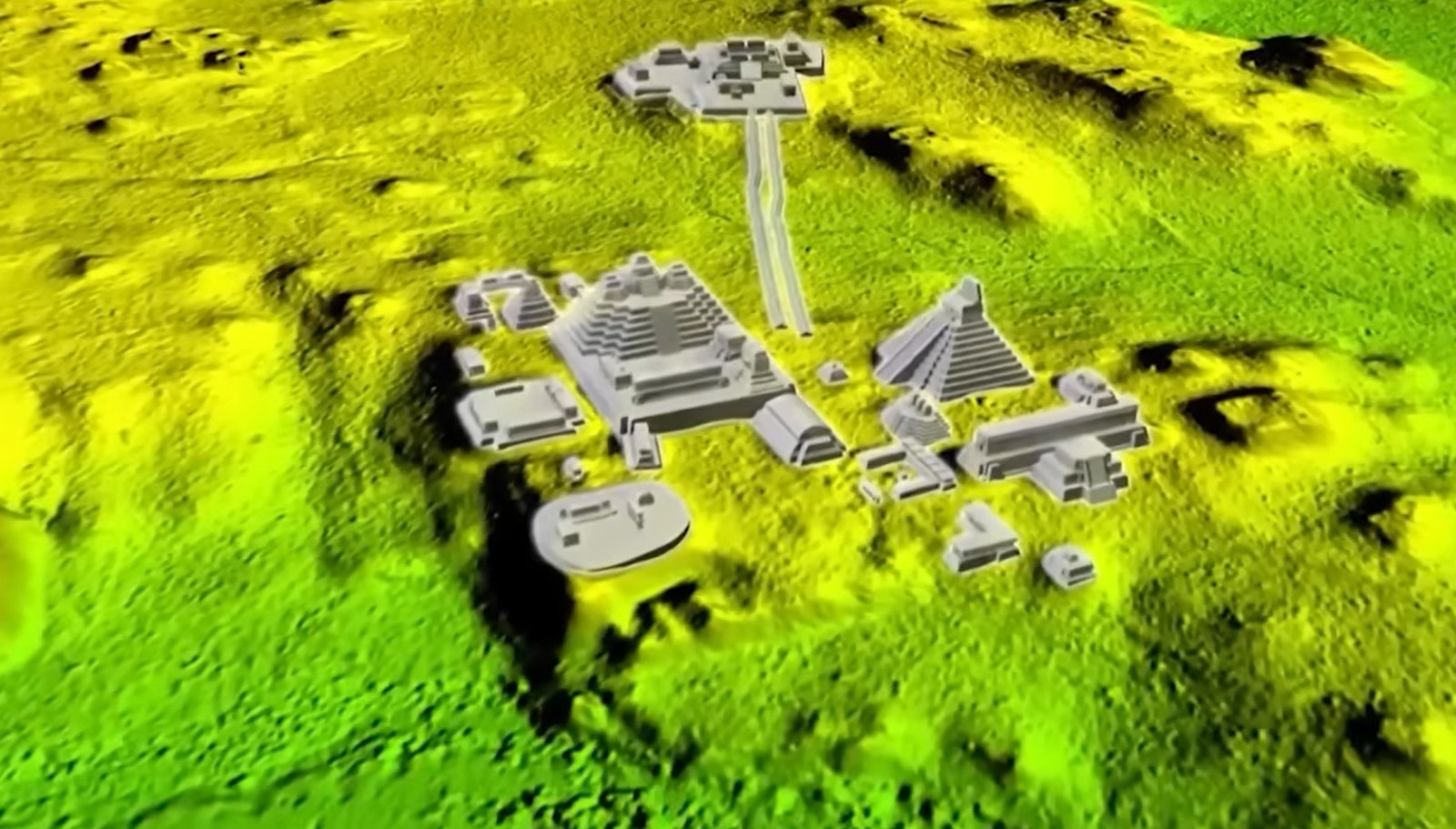
The following LIDAR profile of La Danta at El Mirador shows that the lower platform is clearly a reshaped hill just like Tonina, and thus should NOT be counted as part of the pyramid height.