How Old is the Earth? How the Bible Timeline Might Fit with Earth’s Geologic & Archaeological Prehistory
.
.
Introduction
I believe the Hebrew Old Testament was created as a response to ancient-academic histories. Just as Pharaoh Ptolemy commissioned Manetho to write Aegyptiaca, the History of Egypt in the 3rd century BC, modern scholarship seems to point toward Ezra as they key figure in assembling a sizable team of Israel’s best post-exilic scholar-priests to write the history of the world through the Jewish lens from the libraries and best resources they had in 491 BC. (Before both Herodotus’ Histories & Menetho’s Aegyptiaca, & drawing heavily from histories compiled by priest/scholars of kings Josiah & Hezekiah.)
From my experience reading fascinating channeled texts such as those written by mystics like John Ballou Newbrough (1828–1891) or John S.M. Ward (1885 – 1949), I suspect Ezra also employed skilled prophetic mystics who claimed the ability to channel/reveal large sections of impressive historic works through a type of revelation which allowed them to see history in a condensed visionary and symbolic/meaningful way. (read their impressive works here)
These scholar/mystics either foreran or followed ancient scholars like Plato, Ptolemy & Hipparchus in computing the ‘great year‘ or prophetic/symbolic version of the procession of the equinoxes. This ‘Platonic Year’ as it came to be known was a system of mystical knowledge based on the actual astronomical calculations for the length of the cycle it takes for the stars to precess and then return into their original locations. A process that relates to being able to prophecy or predict lunar & solar eclipses, as well as the metonic cycle (upon which the Jewish calendar is largely based) and which involves the mystical numbers of 7, 70, & 490 from jewish prophetic texts. (70×360°=25,500 & 490×52=25,500)
However, even though I sympathize with those who see the first chapters of Genesis as a literal accounts of the earth’s 7000 year creation. I believe it makes far more intellectual and spiritual sense to see those chapters as an incredibly creative and sophisticated way of weaving the true sequence and key points of creation together with an inspired ancient prophetic timeline which seeks to condense and symbolize the earth’s long history into a shorter predictive system of sevens based on lunar-solar cycles as well as larger astronomical cycles.
The Profound Symbolism in the Bible’s Timeline
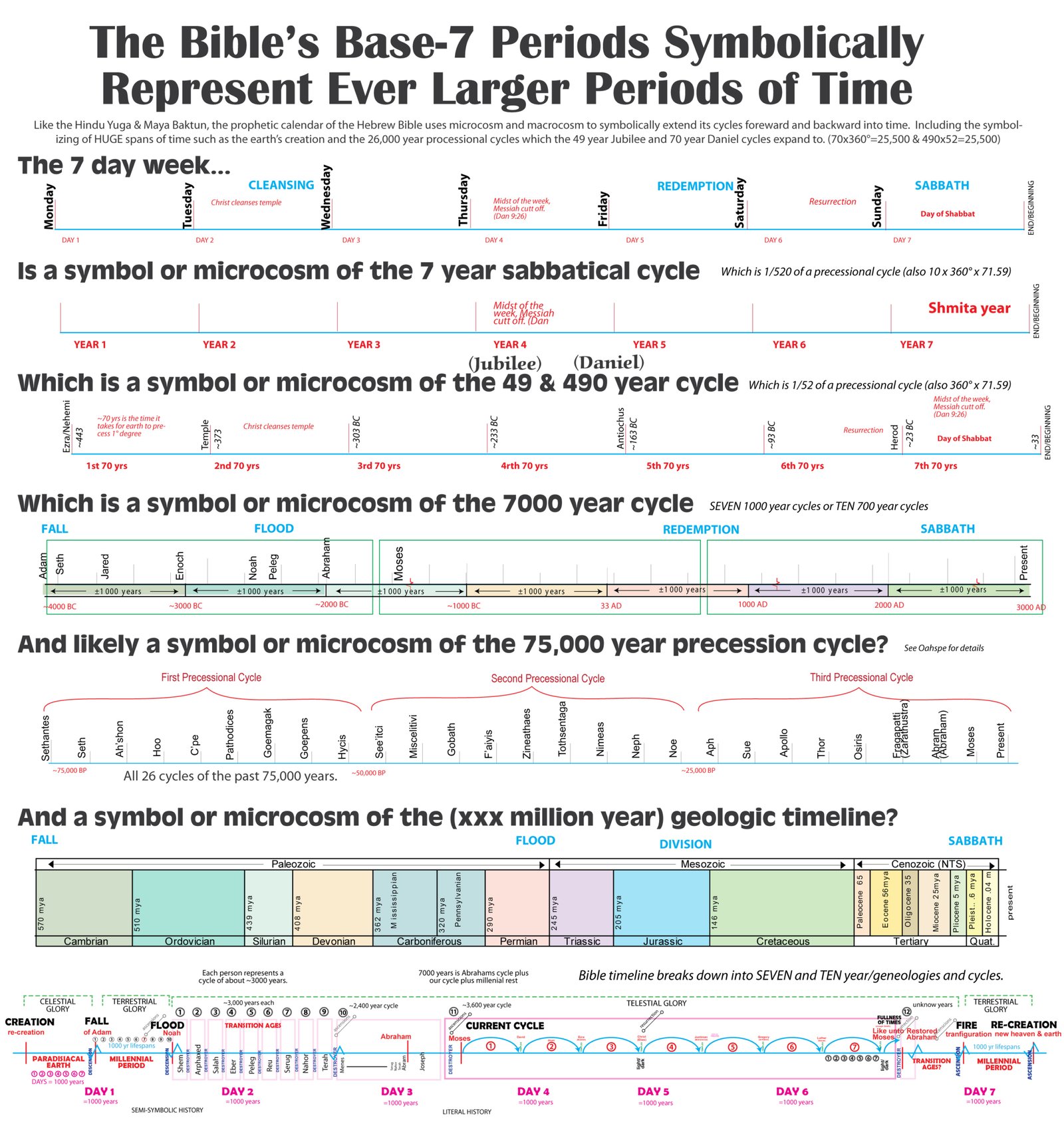
It’s significant to note that Genesis is separated into three main sections, each separated into sets of ten, pointing to its highly symbolic nature. These are; 1. Then ten demigods. 2. The ten Patriarchs 3. The ten/seven Jubilee sets of the current cycle. (49x7x10)
Let’s quickly go over the profound symbolism in these three sections of the bible. First in its timeline are the ten demigods. Most ancient histories of Ezra’s day started with the demigod’s of their culture with lifespans ranging from the hundreds to the tens of thousands. An account of many such ancient demigod genealogies can be read about in Diodorus and Eusibus Chronicle here. (Both the oldest Babylonian & Egyptian histories started with the demigods.)
For Ezra, he seems to have employed exactly ten demigods between creation and flood, followed by exactly ten patriarchs between the flood and Abraham (the father of his people). The ten antediluvian demigods are (1) Adam, Seth, (3) Enos, (4) Cainan, (5) Mahalaleel, (6) Jared, (7) Enoch, (8) Methuselah, (9) Lamech and (10) Noah. Undoubtedly the inclusion of exactly ten antediluvians with average ages between 700 & 1000 years is no accident. In fact the names themselves are symbolic as they are often translated to form the Hebrew sentence “Man is appointed mortal sorrow, (but) the Blessed God shall come down teaching. His death shall bring the despairing comfort and rest.” The number ten in this case seems to be symbolizing a complete age, and fulfilling multiple purposes in his chronology. By making each demigod have a lifespan approximating 1000 years he seems to symbolize an Egyptian concept of a full ‘age’ or cycle of heavenly time. Joseph Smith attempted to explain this in saying.
1 And I, Abraham, had the Urim and Thummim, which the Lord my God had given unto me, in Ur of the Chaldees; 2 And I saw the stars, that they were very great, and that one of them was nearest unto the throne of God; and there were many great ones which were near unto it; 4 And the Lord said unto me, by the Urim and Thummim, that Kolob was after the manner of the Lord, according to its times and seasons in the revolutions thereof; that one revolution was a day unto the Lord, after his manner of reckoning, it being one thousand years according to the time appointed unto that whereon thou standest. This is the reckoning of the Lord’s time, according to the reckoning of Kolob. (Book of Abraham 3:1–4) As also “Kolob, signifying the first creation, nearest to the celestial, or the residence of God. First in government, the last pertaining to the measurement of time. The measurement according to celestial time, which celestial time signifies one day to a cubit. One day in Kolob is equal to a thousand years according to the measurement of this earth, which is called by the Egyptians Jah-oh-eh.” (facsimile 2, figure 1)
This theory that the individual names in the antediluvian bible chronology actually represent entire ages ranging from 1000-3000 years is laid out in the channeled apocryphal work, Oahspe. Here each cycle is called a ‘dan’ and is said to equate to roughly 2500-3500 years of earth’s orbit wherein it passes through a celestial zodiac and makes a complete “harvest of souls” before a time of cosmic destruction. (add reference & quote). Therefore according to Oahspe, the ten demigods roughly represent 10 past cycles of time which approximated 3000 years each, much like the Platonic Great Year of ~25,000.
The concept that the early bible chronology & genealogy represent something deeper than face value, such as entire ages of the past continues with the post-diluvial timeline which is again also composed of exactly ten names from the Flood to Abraham. These are (1) Shem, (2) Arphaxed, (3) Salah, (4) Eber, (5) Peleg, (6) Reu, (7) Serug, (8) Nahor, (9) Terah and (10) Abraham. This seems more than coincidence, and again the Book Oahspe gives a convincing channeled history suggesting that these TWO, ten named sequences represent TWO separate processionary periods of 25,000 years each (so 50,000 years total). An interesting number because we also find it in other impressive modern prophetic/channeled works such as ‘The Law of One’ Series. The works of Edgar Cayce, The Keys of Enoch, Bringers of the Dawn. We might ascribe this to coincidence were it not for the fact that the bible cuts it’s modern history since Moses into SEVEN 490 year periods of captivity and freedom (laid out in Leviticus x:xx) after the three patriarchs of Abraham, Isaac & Jacob (Israel). Once again seriously seeming to be pointing us to something greater….
By adding 2 such sequences of 10 (the demigod plus the patriarchs), Ezra may have meant to equate his symbolic timeline to 70,000 years. Seven thousand years short of the important cosmic processional number of 77,400 years. Or a period of 3 great years. Dualistically, Ezra may have used specific numbers slightly less than 1000 to encode crytpic cypers in a way that accorded with Egyptian or Babylonian records for Menes, called Aegyptus and the father of the Egyptian race (according with Hermes in Greek). Note that in Oahspe, the timeline of Abraham is used to dualistically symbolize an entire age of ~2500 years.
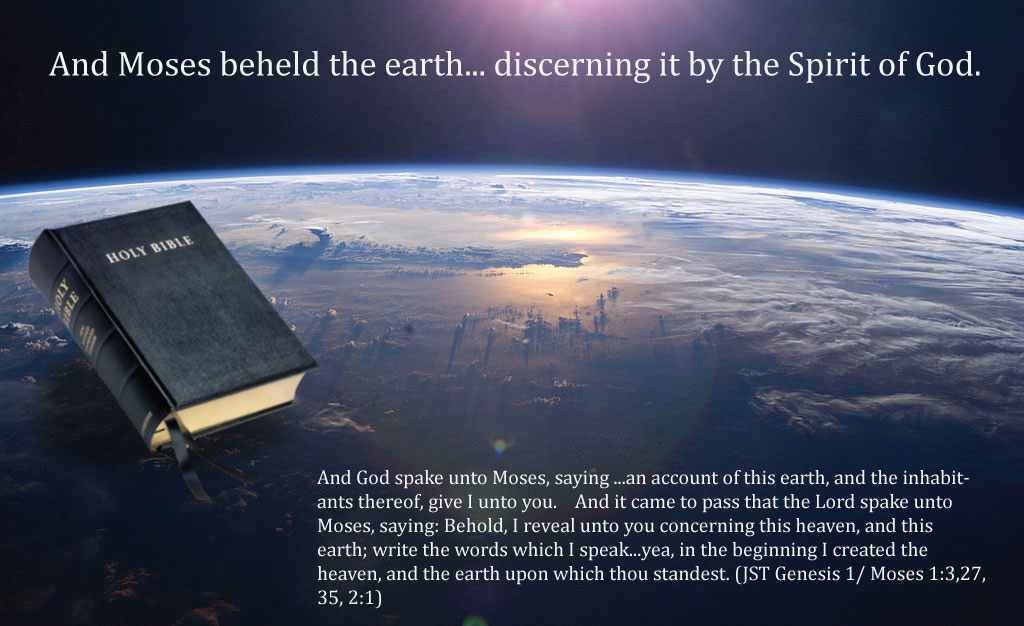
However, what many might not have considered is that Genesis is actually meant to accord or roughly correspond to the visions seen by Moses (according to LDS theology–see Moses ch. 2) or seen by the adepts of old (see Oahspe) concerning the formation of the earth. In fact for a modern example of this, see J.S.M. Ward’s vision of the formation of the earth here. This would explain why it begins with details of the formation of energy/light, the galaxy, the planets and the plants and animals. For a more detailed ancient view of those parts of the bible, see the opening books of the Kolbrin (Link).
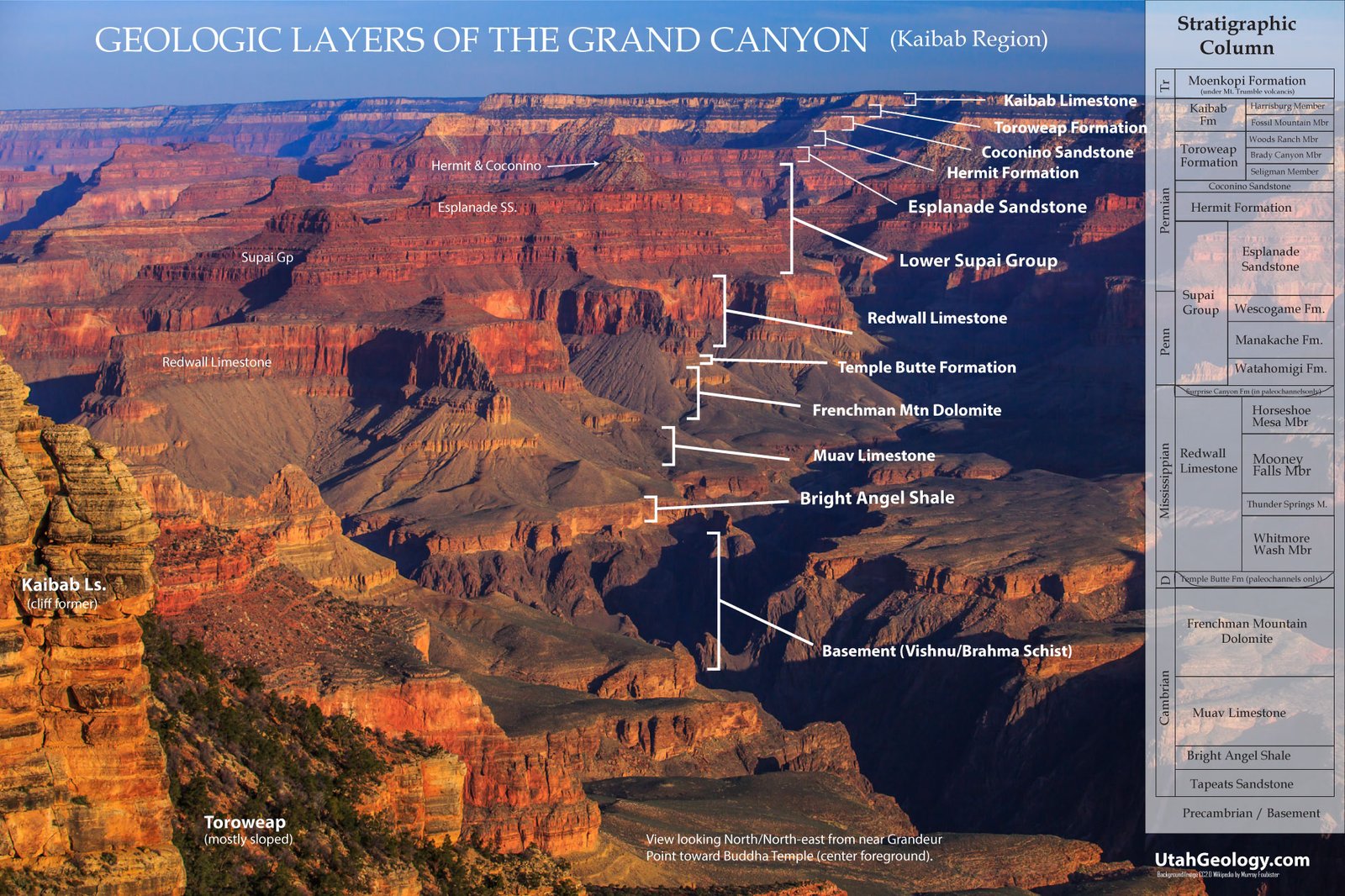
In correlating the bible with Geology, I believe the important geophysical events such as the creation of earth, the creation of animals (and beginnings of them dying and making fossils) as well as The Flood and separation of the Continents at Peleg at least seem to be put in the correct order, but then superimposed upon the narrative of mankind so as to create a timeline which correlates natural science with scripture. (ie. Things start living and dying in both the Garden of Eden and Cambrian Explosion, then there’s a Great Dying at the Flood/Permian Extinction, then there’s a separation of the continents at Peleg/Pangea, and then a general march to the conditions of today.
.
.
Non-Biblical Texts & Catastrophe
Beyond the biblical canon, other ancient texts like the Kolbrin and revealed works such as Oahspe provide a startlingly technical perspective on the knowledge of the ancients concerning the forces that shaped our pre-history, suggesting that the formative periods of Genesis were never intended as a literal countdown but instead were a sophisticated warning to future generations based on knowledge of the past. In the Kolbrin, an Egyptian-Celtic anthology, the “Destroyer” that brings about the destruction and RE-creation of earth, is depicted as a cyclical cultural extinction event caused by the celestial “Doomshape” that more closely resembles a high-energy solar or plasma event. It describes a circling ball of flame that “scatters small fiery offspring” and sends “writhing snakelike fingers” down to Earth—a vivid match for the twisted, rope-like filaments of a massive Coronal Mass Ejection (CME) or a solar outburst. This “Destroyer” is said to turn the sky into a furnace, drying up the moisture of the land until the very pastures become white ashes, suggesting a catastrophic surge of radiant energy that predates the standard “impact” theories often discussed in modern circles.
This solar-driven catastrophism finds a profound correlation in the 19th-century revealed text Oahspe, which details the earth’s passage through “Dan’ha” or “time of celestial light.” Oahspe describes the galaxy as being filled with vast, invisible arrays of energy filaments and varying densities of “ethereal” matter. As the solar system moves through these different cosmic zones, the planet undergoes radical shifts in temperature and atmospheric pressure. This provides a compelling metaphysical framework for the Dansgaard-Oeschger (D-O) events found in the Greenland ice cores—those abrupt, flickering climate oscillations of the last Ice Age that saw temperatures jump or plummet by double digits in just a few decades. In this model, the Younger Dryas was not just a random impact, but a consequence of the Earth entering a highly charged “Dan’ha” belt, where solar activity surged and atmospheric chemistry was altered by a “galactic array” of energy.
When we integrate these accounts with LDS theology, particularly the Book of Moses, a new picture of “Creation” emerges. In Moses 2, the creation is presented as a series of visions shown to the prophet, suggesting that Genesis reflects a condensed, symbolic summary of vast geological and cosmic epochs seen through a spiritual lens. This accords with the “adepts of old” mentioned in Oahspe or the visions of J.S.M. Ward, where the opening “days” of light and formation describe the ignition of our sun and the slow accretion of the galaxy. By viewing the talking serpent (Egyptian Apep, the adversary of light) or the rib of Adam as sacred metaphors, we can see the formative period as a technical “Super-Project” rather than a fairy tale. The Kolbrin’s detailed descriptions of the Earth’s early cooling and the “Sons of Fire” further reinforce that the ancients were documenting a physical, albeit high-energy, process of planetary birth and rebirth.
Ultimately, correlating these texts with the geological record reveals a striking chronological symmetry. The “Garden of Eden” and the subsequent “fall” parallel the Cambrian Explosion, where life suddenly bloomed and, crucially, began to die and leave the first massive fossil record. The “Great Flood” aligns with the catastrophic Permian Extinction, K/T Extinction, Younger Dryas meltwater pulses or other mega extinction events, followed by the literal “division of the earth” at the time of Peleg—a scriptural echo of the final breakup of Pangea as well as the eventual division of mankind as the planet calms down enough for societies to start exploring and colonializing. By superimposing this narrative of mankind onto the geophysical timeline, we find a synthesis where natural science and scripture are not in conflict. Instead, they represent two different ways of describing the same “march to the conditions of today,” where the Earth was forged in fire, scoured by solar outbursts, and finally settled into the stable Holocene environment we currently inhabit.
.
Growing Body of Catastrophism Research
While much of the traditional creationist debate has centered on a binary choice between a 7,000-year literalism and standard uniformitarian geology, a compelling “middle path” has begun to capture the public imagination. This movement is spearheaded by influential figures like Graham Hancock and Randall Carlson, who argue that the foundational myths of humanity—most notably the Biblical Flood and Plato’s account of Atlantis—are not mere fictions, but ancestral memories of a verified geological catastrophe. Their work centers on the Younger Dryas Impact Hypothesis, proposing that a fragmented comet struck the North American ice sheets approximately 12,800 years ago. This event, they argue, triggered a near-instantaneous melting of the glaciers, leading to “Meltwater Pulse 1B” and a global sea-level rise of hundreds of feet that would have looked, to any surviving witness, like the world-ending deluges described in ancient texts.
The popularity of this perspective has exploded in recent years, largely due to the synthesis of rigorous geological data with mythological analysis. Researchers like Carlson have meticulously documented the “channeled scablands” of the Pacific Northwest, arguing that the massive ripples and eroded basalt columns are evidence of cataclysmic flooding on a scale that standard gradualism struggles to explain. Hancock, through his massive digital platform and Netflix series, has paired these geological anomalies with archaeological sites like Göbekli Tepe, suggesting that a sophisticated “lost civilization” was nearly wiped out by these events. By framing the Younger Dryas as the historical anchor for the “Great Flood,” these players have garnered a massive following of seekers who find traditional archaeology too rigid and young-earth models too restrictive.
This growing body of “Alternative History” followers is further bolstered by a diverse array of researchers, including members of the Comet Research Group, who provide the peer-reviewed ammunition for these theories. They point to the “Black Mat” layer found across four continents—containing nanodiamonds, microspherules, and iridium—as the physical fingerprint of a cosmic impact. For many in the LDS and broader Christian community, this provides a fascinating bridge: it allows for an Earth that is ancient, yet acknowledges a recent, world-altering catastrophe that aligns with the timing of the transition into the current Holocene epoch. By identifying the Younger Dryas as the literal catalyst for the flood accounts, these researchers offer a model where “sacred history” and “catastrophic geology” finally meet.
Ultimately, the allure of the Hancock-Carlson model lies in its ability to treat ancient texts with the seriousness of a forensic report. By suggesting that the destruction of Atlantis and the Flood of Noah occur at the exact moment the geological record shows a 400-foot rise in sea level, they move the conversation out of the realm of blind faith and into the realm of testable, catastrophic science. This shift has created a robust community of followers who are less interested in debating “days” of creation and more focused on uncovering a forgotten chapter of human history—one where the stars and the deep geologic past collided to reset the clock of civilization.
.
Biblical Actualism– A Novel Young Earth Model
As I know there are many orthodox Jews, Muslims and Christian Creationists who visit this site, I offer the following Geologic/Scriptural correlation that is at least somewhat rational. (Which is more than I can say for the majority of creationist biblical stratigraphic correlations out there). Take it for what it’s worth even though it is only meant to represent what I believe the writers might have intended or perhaps even thought in the way they saw the earth’s progression through time.
AND NOTE that if one insists on trying to fit the geologic record into the bible’s literal 7,000 or 14,000 year timeline. Because of the ‘division of the land’ in the days of Peleg a few hundred years after the flood, the ONLY rational placement of the biblical global Flood is with one of the few major Mesozoic extinction events such as the K/T or Great Permian Extinction (superimposing archaeological evidence of human history over the geologic record or timeline). Any other placement comes up against insurmountable problems. (Such as the ichnofossils and track sites found in virtually EVERY layer of the Grand Staircase, showcased in my article here.) But even so, such a correlation would have to assume things like:
1. Radiometric dating is off by millions of years. (Possible if one suggests unknown galactic field conditions affected them in the past or that ‘cosmic inflation‘ actually only ended recently and somehow affected radioactive decay.)
2. Man and most ‘kinds’ of animals existed in the early geologic record but left no trace in the fossil record because they were sequestered on a small continent or island somewhere. (An interesting theory given how many channeled texts speak of the isolated islands of Pan, Mu or Lemuria.)
3. Rates of erosion and deposition in the deep past occurred under largely uniformitarian principles, but at vastly higher rates because of differences in ancient atmospheric density, water carrying capacity, climate variability and also suggesting that the draining of creation and flood waters from the land over many hundreds of years between the Flood and Abraham accelerated normal processes to incredibly rapid speeds. (This is a major problem, because it requires alternative explanations of so much stratigraphic evidence)
4. Orogenesis & plate motion is driven by repeated rapid pole shift, not only mantle convection cells. (there’s actually a good amount of evidence for this theory)
5. Biostratigraphy and Faunal Succession must be entirely re-interpreted from evidence of evolution to evidence of reproduction rates. (Some type of hybrid of this idea is entirely plausible where things like Conedont & Brachiopod variation are evolutionarily driven, but larger variations between phyla are actually reproduction rate driven)
The ‘Zoo Hypothesis and Faunal Succession as R-Value Representation
One thing young-earther’s do have going for them is the striking and often overlooked anomaly in the biostratigraphic record with the uncanny correlation between the appearance of species in the fossil record and their biological reproductive strategies, specifically their r-selection values. In standard evolutionary theory, the “fecundity” of a species—its ability to produce vast numbers of offspring rapidly—is merely a survival tactic. However, when examining the “Cambrian Explosion,” we see a sudden, global saturation of complex life that defies the slow, incremental pace of Darwinian gradualism. This phenomenon aligns remarkably well with a “Zoo Hypothesis” or a “Sequestration Model,” wherein life was specially curated or brought from elsewhere and placed upon a secluded island or continent. In this light, the fossil record does not necessarily document the evolution of life, but rather the succession of its spread across the globe as it migrated from this isolated source.
This “Migration Succession” theory explains why the earliest Paleozoic layers are dominated by organisms like corals, brachiopods, and crinoids. These species utilize broadcast spawning, releasing millions of gametes into the water column to be carried by global currents. Their ability to colonize new territory is virtually “lightning fast,” allowing them to saturate the global seafloor and enter the fossil record almost instantly. Following them are fish, which produce hundreds of eggs, and eventually, small mammals that produce dozens of offspring per year. The large mammals and humans, which have the lowest reproductive rates ( $K$-selection) and longest gestation periods, naturally appear last in the record simply because it took thousands of years longer for their populations to physically expand and reach a density high enough to leave a detectable fossil footprint.
The absence of mammals and humans in the deeper Paleozoic and Mesozoic layers could therefore be a matter of geography rather than chronology. If the “cradle of humanity” and higher mammalian life was restricted to a small, isolated landmass—perhaps a temperate, pre-glacial Antarctica or a lost micro-continent—they would remain entirely invisible to the paleontological record of the rest of the world. This sequestered “Garden” or “Island” would have functioned as a biological sanctuary, kept separate from the rest of the planet by vast oceans or an incredibly variable and hostile global climate. It is only as the global environment stabilized or a major cataclysm (like the Flood) broke these barriers that these $K$-selected species were forced out into the wider world.
Such a model suggests that the fossil record we see today is a “time-lapse” of a massive, tiered migration. The “Gods” or creators of this system may have strategically released life in waves, or perhaps the earth’s natural climate oscillations served as a gatekeeper, preventing birds and mammals from leaving their sanctuary until the atmosphere was hospitable enough for their high-metabolism survival. If this is true, the fossils of our own deep ancestors may indeed be waiting beneath the ice of Antarctica or in the unsurveyed depths of the Paleozoic crust, serving as a future testament to the folly of assuming that “burial order” is the only way to interpret the history of life on Earth.
It is a striking biological coincidence that the order of the fossil record—from the Cambrian Explosion to the present—aligns almost perfectly with the reproductive “r-values” and dispersal capabilities of the species involved. In modern marine biology, broadcast spawners like corals and brachiopods exhibit what could be called “geological-scale colonization speeds.” A single broadcast-spawning coral, such as Pocillopora verrucosa, releases millions of gametes that fertilize in the open water; these larvae can drift for weeks and colonize new reef systems tens to hundreds of kilometers away in a single generation. Data from the Great Barrier Reef shows that while some “brooding” corals stay local, the mass-spawning varieties possess a “connectivity” that allows them to saturate an entire oceanic basin with staggering speed. If complex life were introduced to a “sequestered island” as the Zoo Hypothesis suggests, these high-fecundity organisms would be the first to “leak” out and saturate the global stratigraphic record, appearing instantly and everywhere.
Following these “biological pioneers,” the fossil record next shows the rise of fish, which utilize a reproductive middle ground. A typical marine fish can produce hundreds to thousands of eggs per year, providing a robust secondary wave of global expansion. In contrast, the mammals that appear much later in the record—particularly large $K$-selected species—produce only a few offspring and require nearly two decades to reach reproductive maturity. Their physical “spread” across a planet would naturally take orders of magnitude longer than a coral larva drifting on a current. In this light, the “standard” faunal succession isn’t necessarily a timeline of evolutionary development, but a timeline of migration velocity. The creatures that showed up first in the rocks are simply the ones that were best at “filling the vacuum” of the early Earth’s empty oceans.
This theory offers a revolutionary solution to the “missing” mammalian fossils of the Paleozoic: the Sequestration Model. If higher mammals and humans were confined to a single, isolated “Cradle” continent—perhaps a temperate, pre-glacial Antarctica or a lost micro-continent—they would remain biologically invisible to the rest of the world for eons. They would not appear in the fossil record of North America or Europe because they simply hadn’t arrived there yet. It may be that the “Gods” or the natural gatekeepers of the Earth’s climate (the D-O events and solar oscillations) kept these high-metabolism species “locked” in their sanctuary until the global environment was ready. If we were to dig beneath the Paleozoic layers of the most remote, unsurveyed corners of the globe, we might find the “anomalous” fossils of our own ancestors, waiting to reveal that the “march of progress” was actually a slow walk out of a single, ancient garden.
.
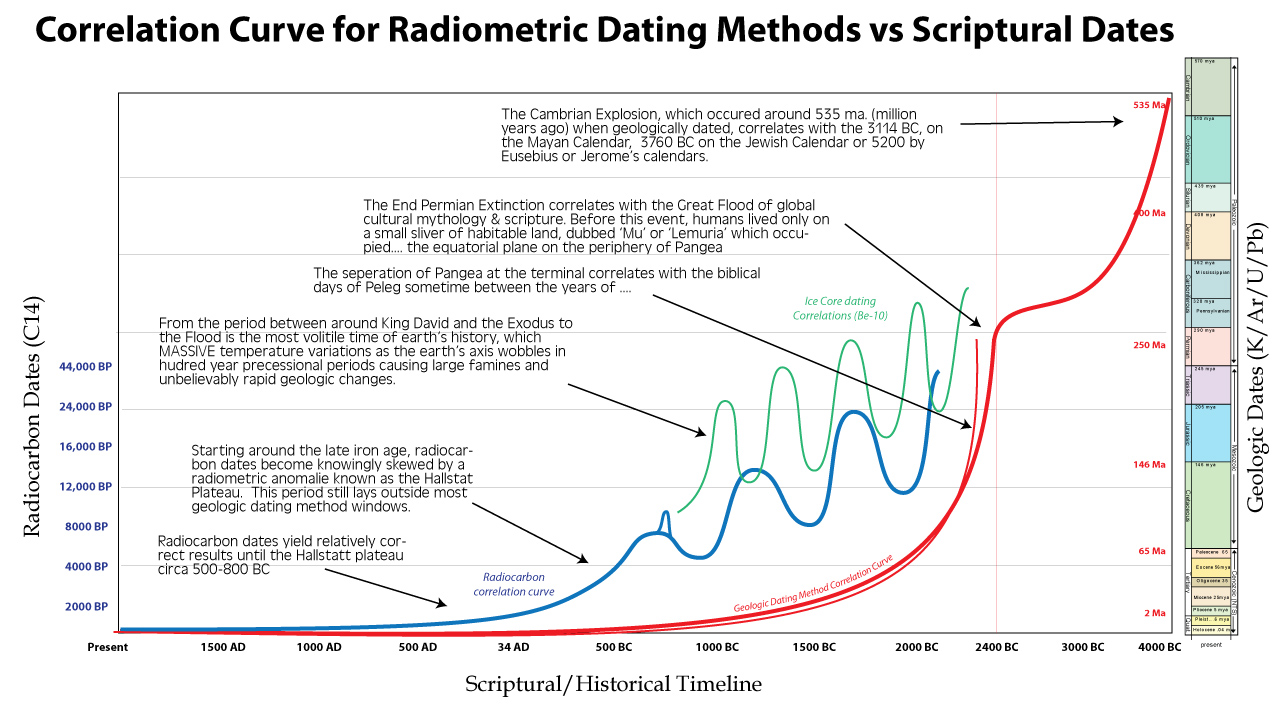
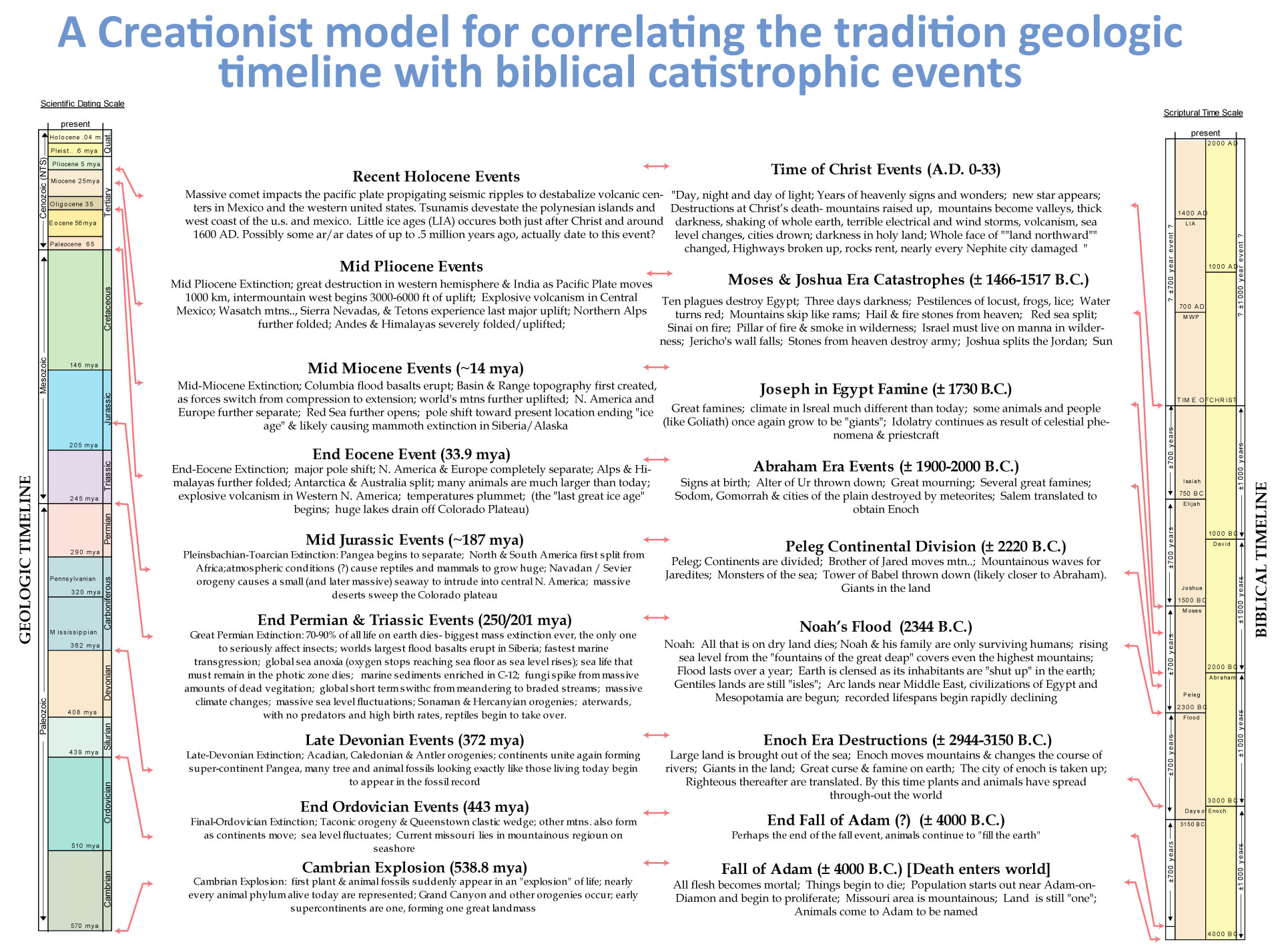
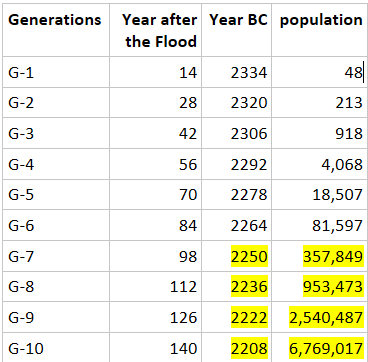
under construction:
Problems With Young-Earth Models & Paradigms:
- Most who do this (Including myself when I was younger), do so because of a strong anti-evolution bias. Trying hard to disprove evolution because it is often associated with anti-religiousness and presented in a very anti-biblical way. But what they fail to see is that ANYONE WHO BELIEVS IN THE BIBLE, ALSO MUST BELIEVE IN EVOLUTION! Its only a question of degrees. Because of its impossibility no-one believe every species was in the biblical ark. So even among creationists the prevailing view is that only animal ‘kinds’ or singe representatives from entire taxonomic phylum were on the arc, which means all existing species and breads evolved from single representatives of the family of felines, canines bears, lizards, (finish). So ask the questions:
- Most creationist ALSO BELIEVE IN CREATION SYMBOLISM! Where the ‘sun moon and stars all created on the FOURTH DAY? The day AFTER grass, trees and plants were created? Or even the fourth thousand years of creation (for those who favor the day of the Lord = 1000 years creation theory). Or that a snake was actually talking to Adam or that woman were actually made from Adam’s rib. NO, most creationist already hold that much of this is symbolic, so why not the timeframes?
- WHERE DO YOU PLACE THE FLOOD. Most creationist are so sloppy on this that its hard for any actual stratigraphic expert to take their arguments seriously. They often point to the layers of the Grand Canyon as being DEPOSITED in the flood, and then ALSO suggest that the canyon itself was then ERODED by the flood. This, unfortunately, is simply impossible because of the fact that subaerial ichnofossils, such as TERRESTRIAL FOOTPRINTS are found in the majority of the Canyons layers. THESE CAN’T BE DEPOSITED UNDERWATER. The canyon’s erosion also plays a huge problem, as each canyon is proportional to the MODERN flood potential of its stream. AND the folds upriver can ONLY be eroded concurrent with slow uplift on rivers that once again are proportional to current flood potentials! (flesh out)
- Paleozoic. People would have to had lived on a Precambrian bedrock craton, which we’d have to suggest has been subducted somewhere since there’s ZERO evidence of pre-Permian hominids. (Some have suggest Lemuria or Mu are under the Antarctica ice cap, or sunk in the continental crust around New Zealand… Animals would have had to have spread from the proverbial “garden of Eden” of this lost continent and slowly have begun filling the earth and creating the illusion of fossil/faunal succession from their reproduction/dispersion rates. They would have had to be evolutionarily ancient (likely more ape or big-foot like, which is what law of one says, and had the capability of breathing a VERY different atmosphere). They would have been obliterated at the Permian Extinction. Coincidentally, the Bible and New Age literature make these assumptions
- Mesozoic. Again, people would have lived on a Precambrian bedrock craton in a world and atmosphere of the dinosaurs. Here, their foods and plants would have just begun to proliferate but not made any meaningful inroads into the fossil record until the very end. All early hominids would need to be reassessed based on their geologic provenance, pushing the evolution of man back over 200 million years.
- Cenozoic. During Cenozoic times, flora and fauna quickly become modern. This would have to correlate with the period symbolized in the Bible by the Tower of Babel/Abraham where remnants of Giants and Nephalim still roam the earth and things quickly become modern.
- Were the continents one or weren’t they? (if you take the scriptures literally it’s hard to escape that one). You MUST pick the Permian.
- Who are Denisovans? What about Neanderthals?
- When was the ice age? (it must work with Stonehenge, the pyramids, extinction of Mammoths and MULTIPLE glaciations
Matching with Ice Ages Somehow
1- Wisconsin, the last ice age ENDED with Abraham/Current cycle. (this is totally unworkable)
2- Illinoisan,
3- Pre Illinioan: late Mesozoic glacial periods
ANYONE WHO BELIEVS IN THE BIBLE —- BELIEVES IN EVOLUTION. Its only a question of degrees.
-you don’t believe every species was in the ark. Only ‘KINDS’ which means not hundreds of felines, canines bears, lizards,
TABEL OF AUTHORS ON CATASTROPHISM.
| Author | Primary Work | Mechanism of Shift | Evidence Cited (Ice & Geometry) |
| Charles Hapgood | The Earth’s Shifting Crust (1958) | Crustal Slippage: The lithosphere slides over the core like the skin of an orange. | Greenland/Hudson Bay Centering: Noted that the Wisconsin ice sheet was asymmetrical to the current pole; cited the lack of glaciation in Siberia as proof that Siberia was in a temperate zone. |
| Randall Carlson | Cosmographic Research | Cometary Impact: Torque from massive bolide impacts or meltwater pulses. | Ice Sheet Geometry: Focuses on the “scablands” and the massive hydraulic energy required to melt the Cordilleran/Laurentide sheets, suggesting a sudden latitudinal change. |
| Mark Carlotto | Before Egypt (2020) | Rotational Instability: Alignment shifts related to ancient site orientations. | Archeo-astronomy: Argues that the “North” of ancient civilizations (including the Pyramids and Teotihuacan) points to previous locations of the North Pole in Greenland or the Atlantic. |
| Hugh Brown | Cataclysms of the Earth (1967) | Centrifugal Force: Accumulation of ice at the poles creates a “wobble” that eventually flips the planet. | The “Wobbling” Ice Cap: Specifically argued that the mass of the ice cap centered over the Hudson Bay caused the 18,000-year-ago shift. |
| Peter Warlow | The Reversing Earth (1982) | The Tippy-Top Model: Earth flips $180^{\circ}$ due to external gravitational torque. | Climate Suddenness: Used the “frozen mammoths” of Siberia and the lack of ice there to argue for a near-instantaneous flip from temperate to arctic. |
| Author | Primary Work | Background | Key Arguments |
| Donald W. Patten | The Biblical Flood and the Ice Epoch (1966) | Creationist | Argued the Ice Age was caused by a near-miss of the planet Mars, which dumped ice on the poles and caused a catastrophic shift in Earth’s spin axis. |
| Michael Oard | Frozen in Time (2004) | Creationist | Focuses heavily on the Siberian Mammoths. He argues the “lack of ice in Siberia” proves a unique post-flood climate that uniformitarian models cannot explain. |
| Barry Setterfield | The Velocity of Light and the Age of the Universe | Creationist | Proposes that a decay in the speed of light (c) led to changes in atomic behavior, causing the Earth’s core to expand and the crust to shift/rift catastrophically. |
| Joseph C. Dillow | The Waters Above (1981) | Creationist | Focuses on the Vapor Canopy theory. He uses the “frozen mammoths” as proof of a sudden collapse of this canopy, which he links to a rapid change in polar temperatures. |
| Immanuel Velikovsky | Earth in Upheaval (1955) | Catastrophist | While not a Creationist, he is the “godfather” of the Arcuate Mountain Belt argument. He claimed mountains were “heaved up” in hours during axis shifts caused by planetary flybys. |
.
.
.
TO DO:
- Change the exponential decay illustration to show ice ages starting bigger w/ pole wobble and getting smaller and less tight with time (100k periodicity becomes 24k then 3k). Explain w/ text how there used to be no overlap between ice age and geologic history, now its pushed back to Oligocene, I believe should and will push back to Cretaceous.
- Make a new 2 column correlation illustration where right side is the 70k view instead of 7k.
- Put Greenland/geologic poleshift with mya, next to Mario Biltraps changing pole archaology illustration. (they should both be big 7 pointed heptagon where the pole jumps seven times in one 24k circle.