The Xochicalco Stela, Padilla Plates & Reformed Egyptian/ Hebrew in Archaeological Findings
Is there any evidence that supports the statements both in the Book of Mormon and by the Prophet Joseph Smith that these ancient Book of Mormon people wrote in the above-copied characters, called by the Nephites, “reformed Egyptian”?
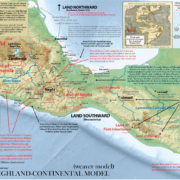
Over 120 years later, these Archaeological discoveries provides evidence that indeed, these ancient people did write in the same characters as copied by Joseph Smith off of the Book of Mormon plates. And the location of these Book of Mormon ‘Reformed Egyptian’ and Hebrew artifacts coincidentally matches with the geography of our Mexican Highland model.
.
The Guerrero ‘Lock’
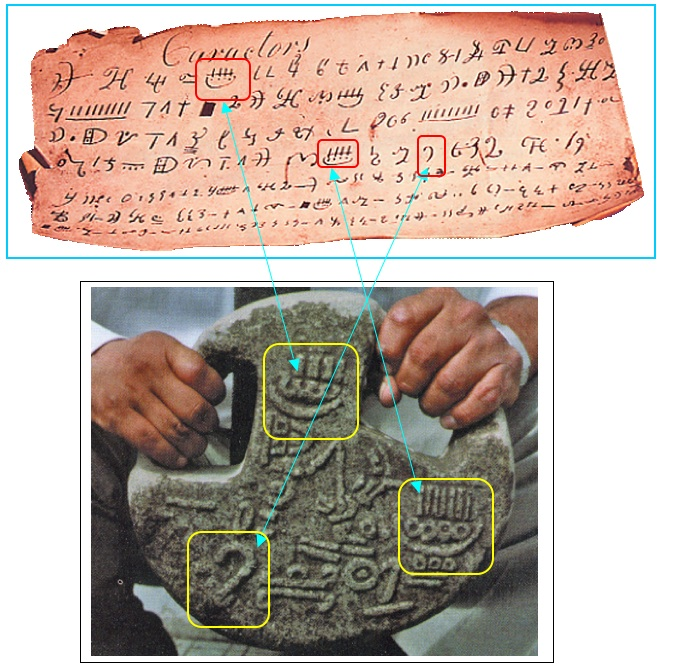
A stone called the “lock” was found “…in the late 1950’s … in an ‘unofficial’ excavation of a tomb…” “in a cave, where it marked a grave”, southwest (northwest?) of the Rio Verde, in the area of San Pedro Amuzgos, where it borders on the state of Guerrero, Mexico. (Jerry L. Ainsworth, The Lives & travels of Mormon & Moroni, by p. 22-23, & 25) This location is within the land of ‘Zarahemla’ of our model.
Xochicalco Stela
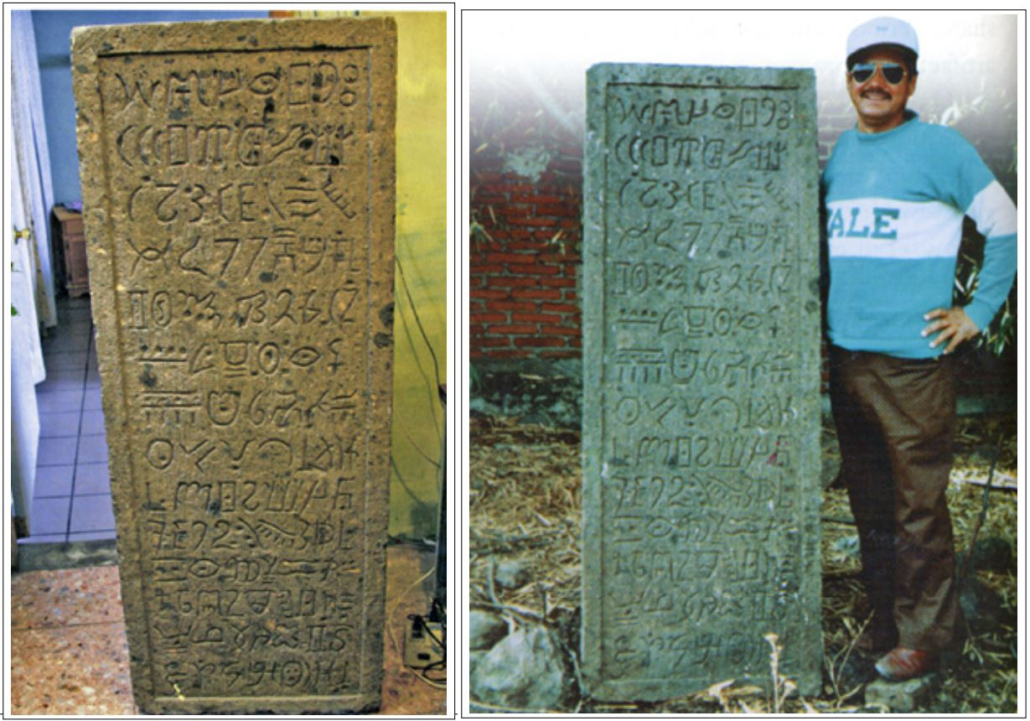
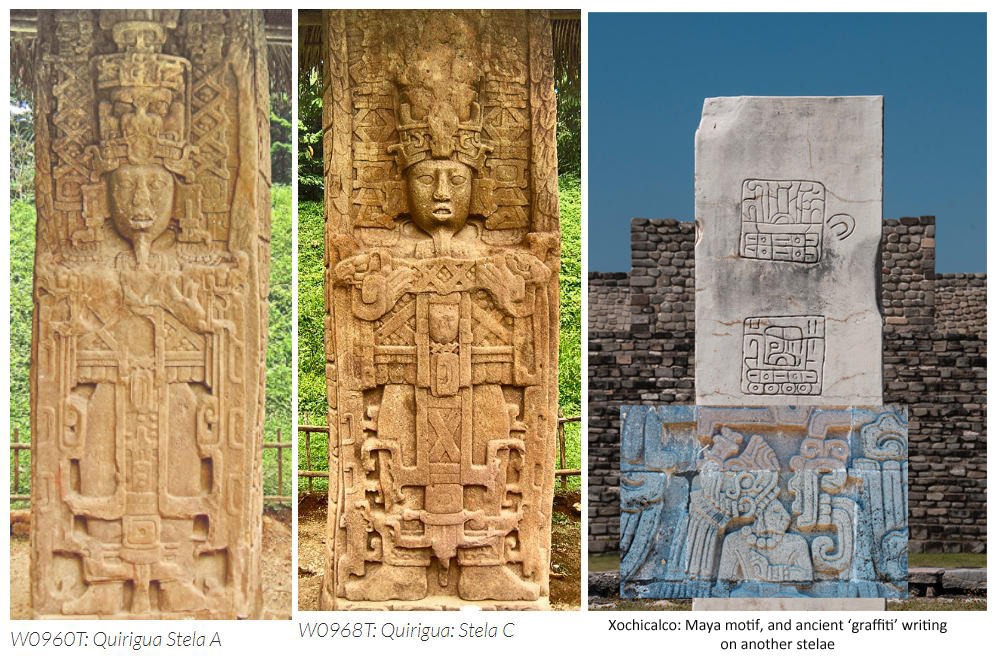
Another example of this ancient writing is found in the Xochicalco Stela (or Stele), reportedly found near the Mesoamerican site of Xochicalco, located just southwest of Cuernavaca and the Balsas Basin in the state of Morelos. (Again in our model’s land of Zarahemla.) The Stela is inscribed on two sides. One side is a well attested Olmeca-Xicalanca/ Mayan art motif similar to other art motifs at Xochicalco and Cacaxtla which are both thought to be 6th-9th Olmeca-Xicalanca trade cities or outposts near the Mexican Highland.
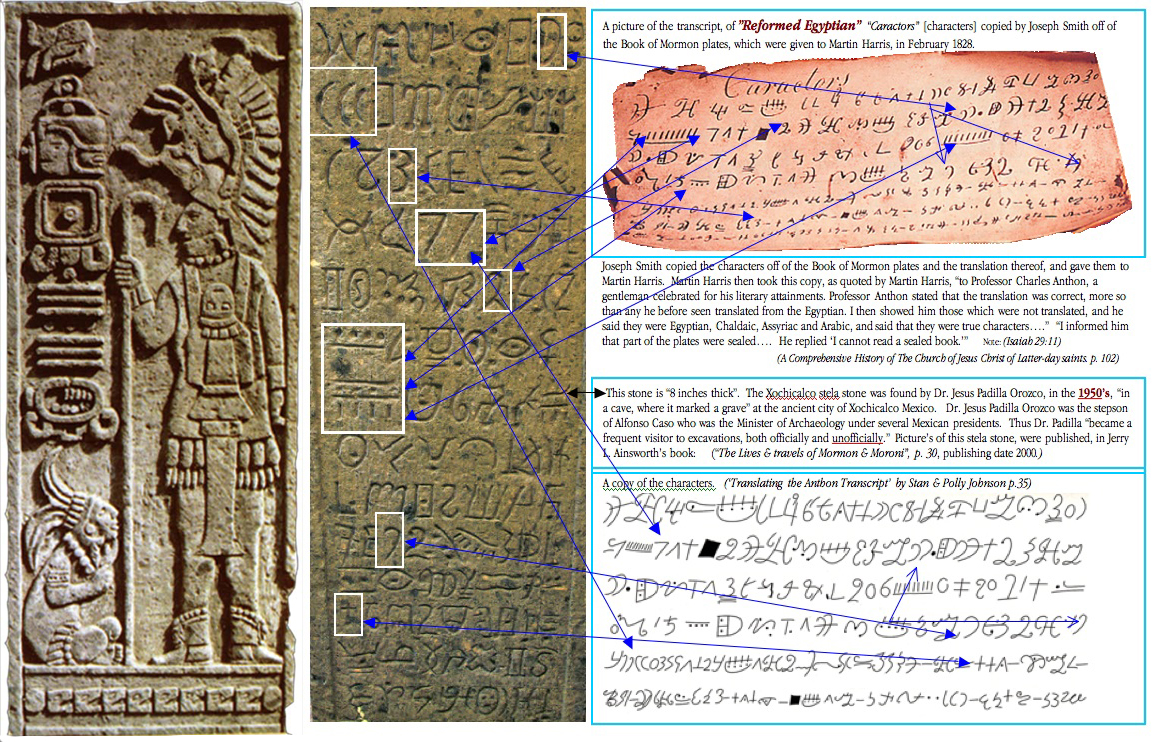
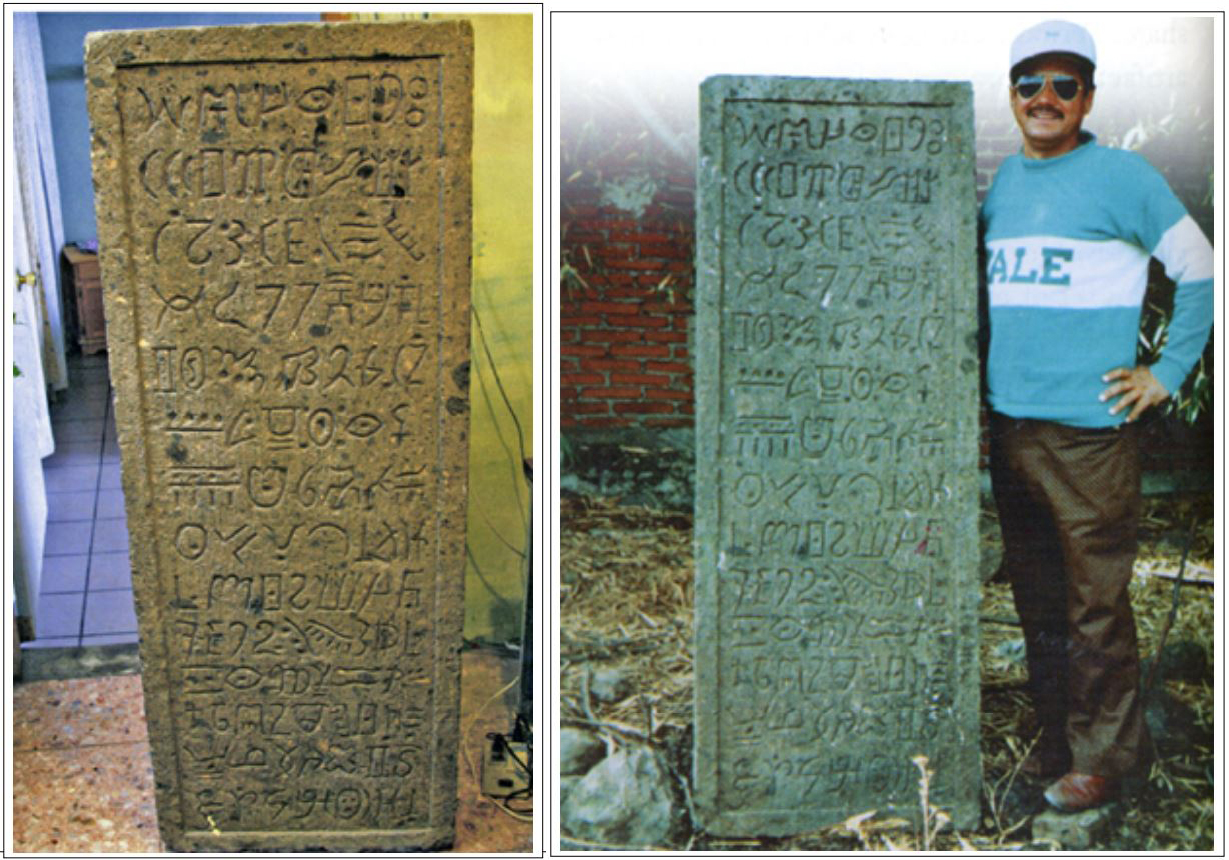
The Stela was found within an early illegal dig either in Morelos or Guerrero and passed to Dr. Jesus Padilla Orozco, in the 1950s. He tried to give the stela to the LDS Church because possession of such artifacts is illegal in Mexico, but the church declined for the same reasons. Jerry Ainsworth has vouched for Dr Padilla’s integrity and sincerity in his knowledge that the stela was authentic, and that his efforts to preserve the artifact had cost him money, reputation and head-ache. And that he was heartbroken by the accusations of BYU ‘scholars’ that the Book of Mormon writing just was “too good to be true “
The front side of the stela matches with other stelas taken from Xochicalco (currently housed in front of the Museum). These stelae are evidence of Teotihuacano and Zapotec influence and were found within the private temple that sits on top of the Pyramid of the Stelae. The stelae were uncovered during excavations in 1960-61 and were painted red, deliberately broken and buried at the centre of the temple in antiquity – an act that is thought to represent the killing of the statues. They are listed as Stelae 1, 2 and 3 and are now housed at the Museo Nacional de Antropologia in Mexico City. The first Stelae is believed to tell the story of Quetzalcoatl’s transfiguration into the Morning Star, followed by his journey across the sky to visit the Pyramid of the Plumed Serpent, which is pictured on the back, followed by his descent into the underworld – it is principally the story of the 260 day transit of Venus across the celestial sphere as the Morning Star
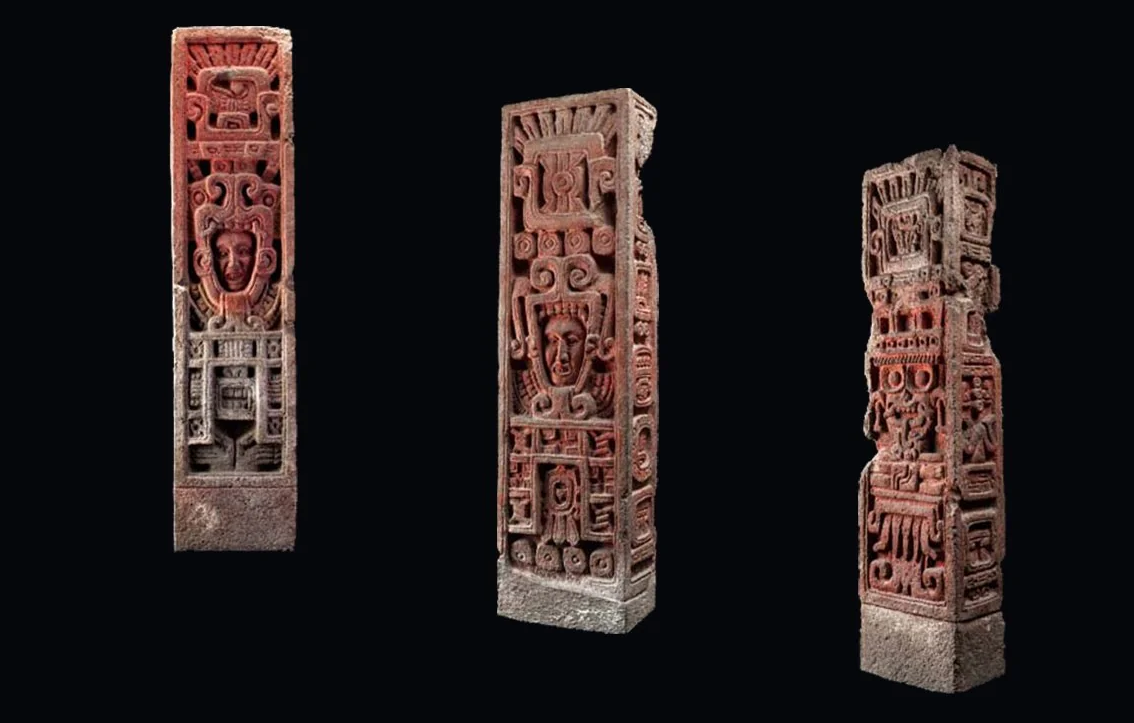
Certain elements in the second of the Stelea closely resemble the stelae of Quirigua, a town situated on the south-eastern border of Mesoamerica. There, a pair of stelae erected in the 8th century combine with a zoomorphic altar to tell the story of creation and the binding of three stones at the beginning of the Mayan fourth-sun. See more information on these Stelae and their resemblance to Quirigua in this article.
.
Mormon scholars tend to suffer from PTDD or Post Traumatic Duped Disorder.
PTDD: (noun) A disorder among scholars to be OVERLY skeptical of any new artifact because they have been traumatized by being duped in the past by Mark Hofmann. 😉
The Padilla Plates & PTDD
The ‘Padilla plates’, which like the Xochicalco stala have been dismissed as modern forgeries by many LDS academics on account of hasty metallurgical analysis (they being ‘too precisely rolled’ and bound and ‘incomplete’ iconography or copying of the Mayan/Toltec artwork they portray), are another example of possible usage of Reformed Egyptian in archaeological artifacts. They were reportedly found in a tomb in Guerrero Mexico which was excavated by Dr. Jesus Padilla Orozco and his companions sometime between 1952 and 1956. Dr. Padilla now a physician in Mexico claims that many other gold objects were found and distributed among the other men participating in the tomb excavation but he chose to take the plates because the writing on them interested him the original Padilla collection consisted of twelve plates five of which were turned over to Jose Davila and seven were retained by Dr. Padilla.
In January 1971 Dr. Padilla brought the plates to be studied along with other artifacts reportedly taken from the Guerrero tomb these consisted of numerous small objects including an array of jade beads shaped like calabashes short tubes and round forms all drilled for stringing also found were carved shell stone receptacles carved obsidian and jade earspools earspools jade labrets ornaments worn in a perforation in the lip monochrome pottery with cascabel supports slit type bell like openings projectile points miniature pottery vessels and copper bells all of which appeared to be of late date for Mesoamerica America absent from the collection were polychrome pottery vessels which may have been sold the assemblage in general is of the post classic period AD 900 1200 and strongly supports Padilla’s claim that the material was taken from a tomb in Guerrero the only objects conspicuously different from those normally found in tombs in the area are the gold plates. Unlike the lock and stela, the evidence of forgery of the Padilla plates is much stronger than the other artifacts. Is it possible these plates were forged by some acquaintance of Padilla in order to add legitimacy to the Stella, or as in the Brewers Cave or tomb of Sanpete valley, might they have been created as replicas in order to allow the pieces to be investigated by someone worried they would be confiscated?
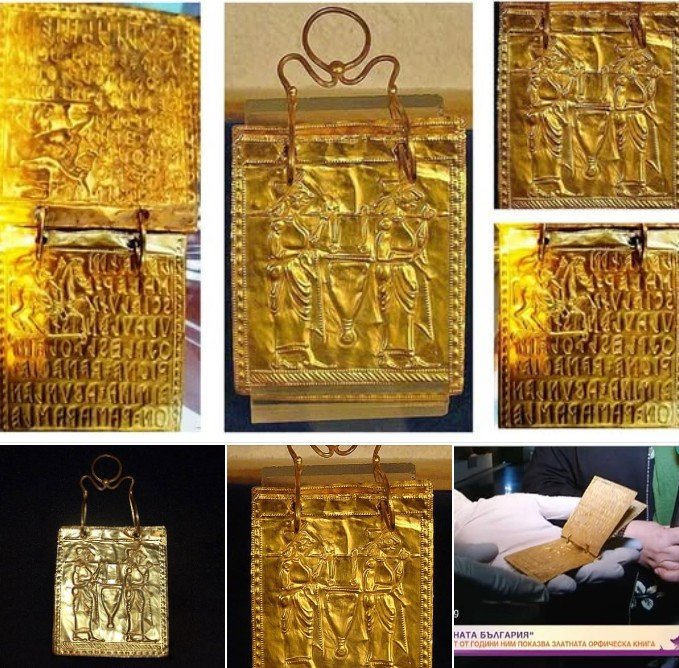
However, it’s also possible that the plates are legitimate and those testing its authenticity were ill informed, testing against a provenance of pre-Christian Native American metallurgy instead of Viking/Toltec age metallurgy and provenance as the Chechen Itza and Tucson Artifact correspondences might suggest. Moreover, no comparison was made to other legitimate examples of ‘binding’, small writing and ‘machine-level precision’ metal plates found in various locations throughout the world (things used to discredit it as modern). For instance:
- The Ketef Hinnom Silver Scrolls (7th–6th Century BCE, Jerusalem):Two miniature silver plaques inscribed with the biblical Priestly Benediction were unrolled to reveal sheets roughly 0.1\mm thick with smooth, uniform surfaces and straight parallel edges. They were worn rolled up inside tiny protective tubes (phylacteries/amulets).
- Greco-Roman & Near Eastern Gold and Silver Lamellae (5th Century BCE – 4th Century CE):Tiny rectangular gold or silver sheets inscribed with protective spells, religious texts, or Orphic instructions were folded or rolled into amulets. Their thickness across the sheet is remarkably consistent, and their corners and trimmed edges show sharp, clean lines without visible hammer indentations.
- The Qumran Copper Scroll (1st Century CE, Near East):Made of pure hammered copper (approx. 1\mm thick), this scroll was trimmed into long, uniform strips with straight edges before being riveted together into a single 2.4-meter piece.
- Chinese Han & Zhou Dynasty Precious Metal Foil & Plaques (5th Century BCE – 2nd Century CE):Chinese metalworkers produced thin gold, silver, and bronze plates for belt plaques, armor inlay, and ritual objects. Many display square cuts, uniform thickness, and clean right angles achieved long before industrial mechanical shearing.
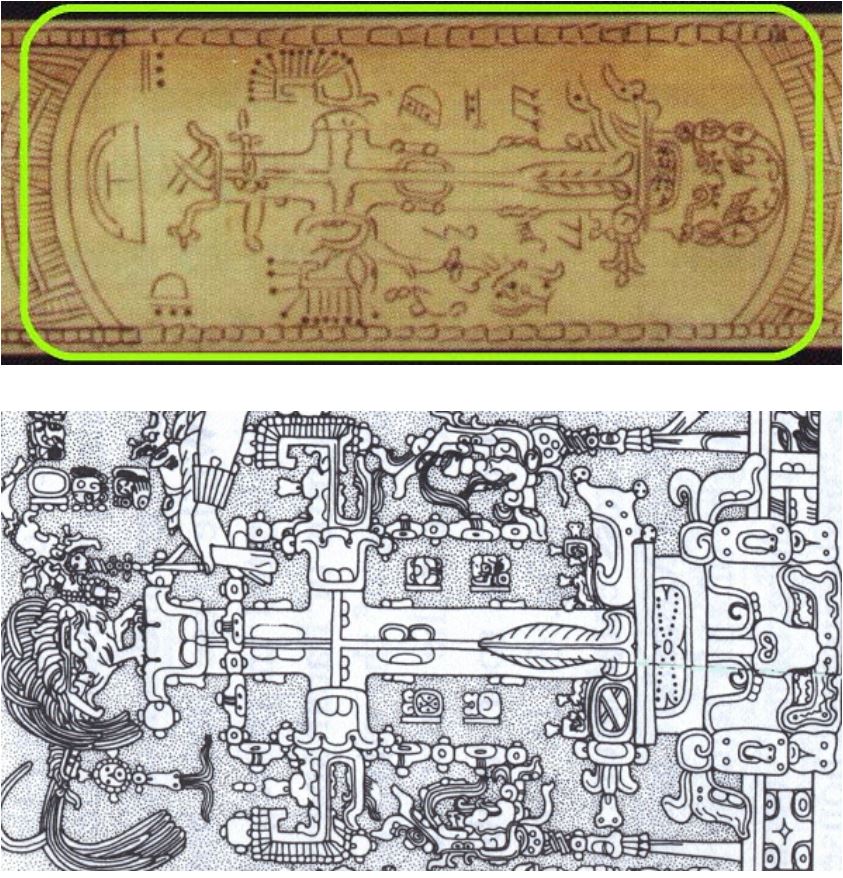
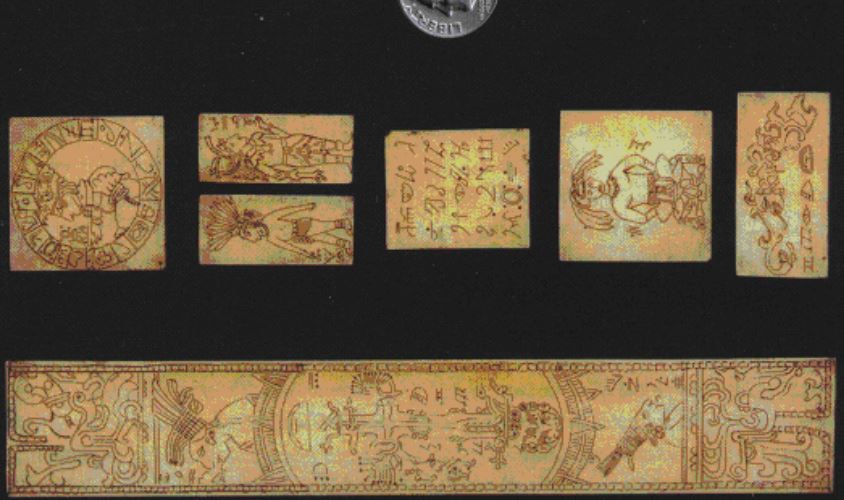
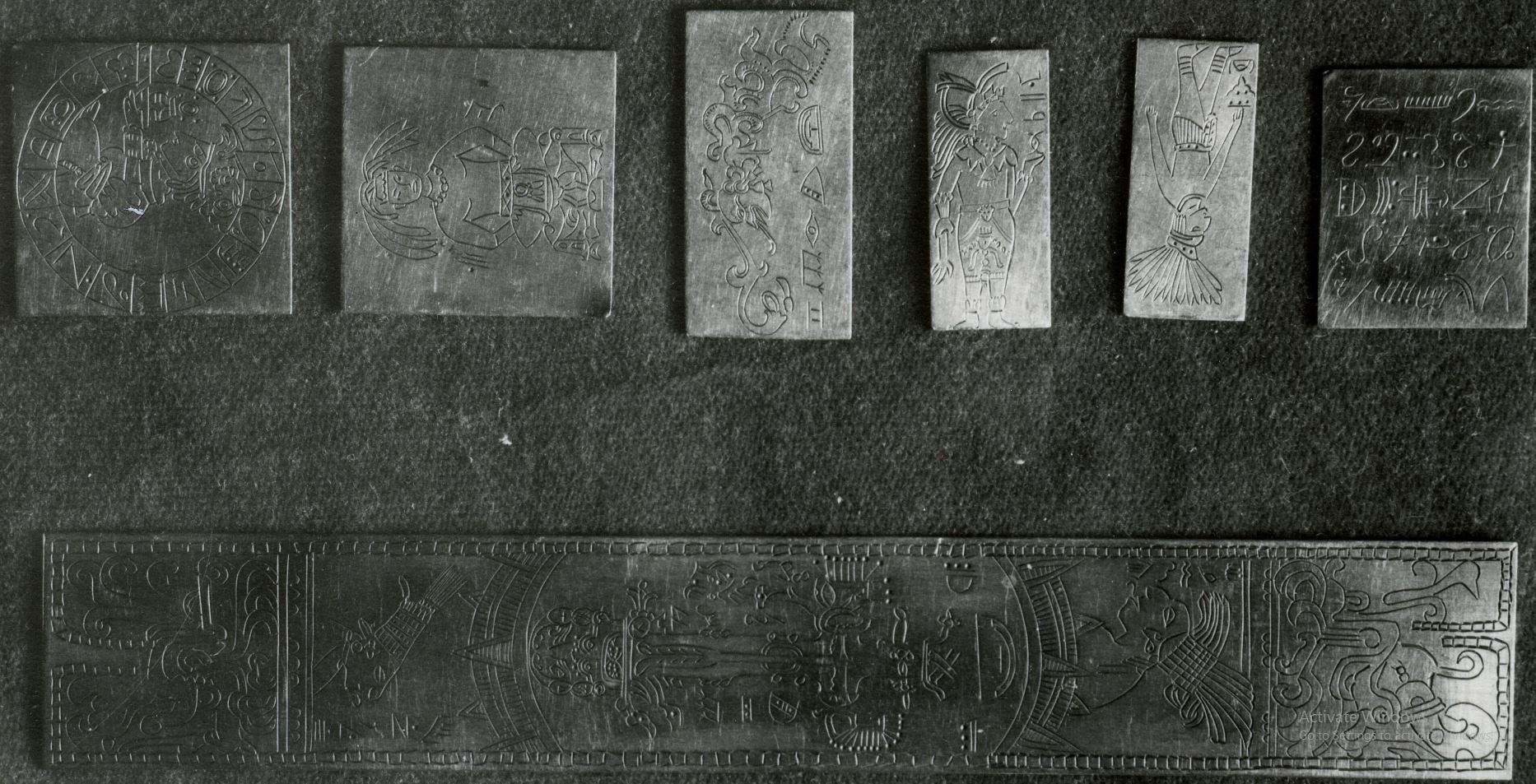
Less controversial matches for characters from the Book of Mormon plates exist in many locations and can be found in Jerry Grovers, peer reviewed academic translation of the Characters Document. Available as a PDF from this location: https://bmslr.org/translation-of-the-caractors-document/
An example of ‘plate’-like artifact similar to that of the Padilla a plates was also found in a tomb in Monte Alban, Oaxaca. (The City of Nephi in our model) In order to truly test the Padilla plates for authenticity, they need to be compared to the metallurgy and cutting work of legitimate artifacts such as this found in Monte Alban. Note the similarity in size and layout, as well as the Chinese or Asiatic characteristics of the artwork, which might be evidence that Chinese traders were importing metallurgical technology and cultural influences.
.

Note the incredible similarity between the human-like figures in the artwork on the front of the Xochicalco Stela and that of the Suchilquitongo Tomb 5 stela. In fact, the red cinnabar pigment is almost exclusively unique to this and Xochicalco stelas. (see Jordan, 119) The venerated bearded figure is especially relevant in a Book of Mormon context and seems to appear in many assorted art motifs of the region. Including that of the golden figure found in Monte Alban seen in the picture above. Note that Keith Jordan in his book “Stone Trees Transplanted? Central Mexican Stelae of the Epiclassic and Early Postclassic and the Question of Maya ‘Influence’” (see my library) gives an explanation of this stela and notes that perhaps more than any other Mesoamerican culture, the Zapotecs also had a tradition of creating stelae with human figures in addition to glyphs.
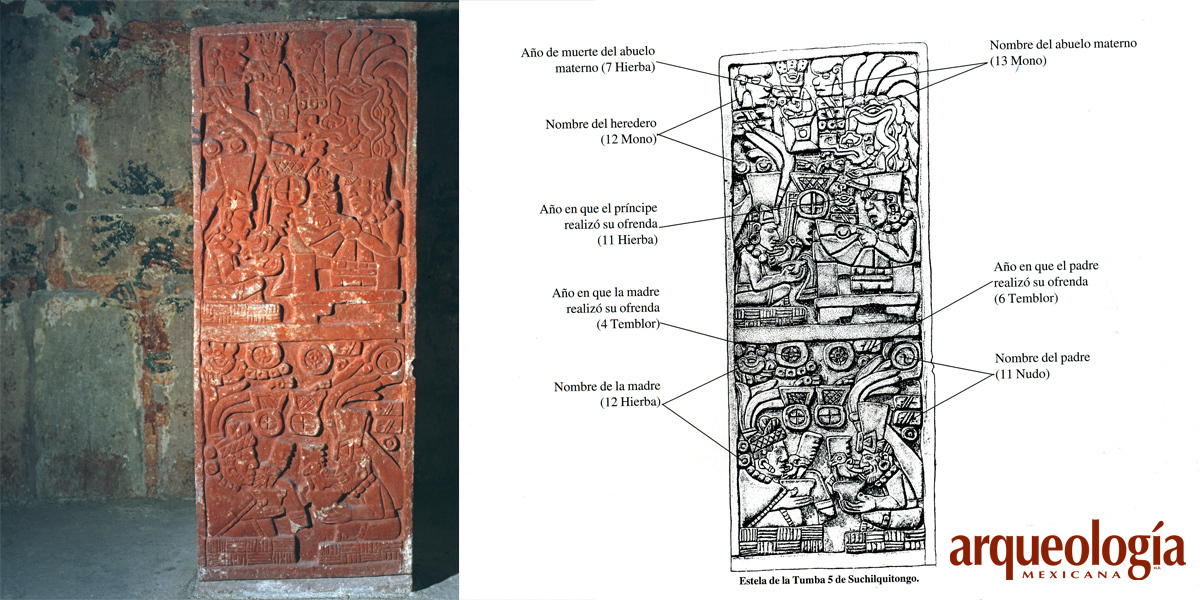
Like its counterparts at other Zapotec sites, the Suchilquitongo genealogical register features reliefs of seated [one modern and one] ancestral couple, portrayed facing each other across stacked horizontal levels or registers. In this instance, there are two scenes on the main, broad face, separated by a line or band. The top register shows a dead lord, 13 Monkey, as a mummy bundle, facing another younger male. A pair of descendants, one a female named 12 Soap Plant (Urcid 2005:101), appears in the lower, offering a bird in sacrifice. The top and sides of the stone slab bear glyphs referring to other descendants of the original couple. Urcid suggests that the stela continues the family genealogy recorded in the door jambs, stucco decoration, and mural paintings of the tomb, as well as recording a series of bird sacrifices to royal ancestors by successive generations of descendants. The portrayal of the aged, bearded individual in the lower register of the Suchilquitongo stela recalls … the depiction of the old bearded man on de la Fuente et al.’s Catalog 158, the fragment of a stela from Tula [near Teotihuacan (see Jordan, 119)
.
SEE MORE EVIDENCE OF EURASIAN INFLUNCE IN THE AMERICAS ON THIS TUCSON ARTIFIACTS ARTICLE!

.
The Los Lunas Decalogue Stone
The Los Lunas Decalogue Stone, an 80-ton basalt boulder located near Hidden Mountain, New Mexico, is another compelling physical and geological evidence of pre-Columbian Semitic presence in North America when analyzed outside mainstream biases. Forensic geologist Scott Wolter’s physical examination of the site highlights the heavy, natural weathering and patina accumulation on the carved lettering, indicating significant age. Early 20th-century reports noted that the stone’s carved groves were heavily coated in natural lichen and rock varnish that match the surrounding undisturbed basalt—a chemical oxidation process that takes centuries to develop. Furthermore, the boulder sits at a distinct 40-degree clockwise tilt, revealing that the inscription was carved while the rock was in its original upright position before seismic activity or natural settling slumped and shifted the ground beneath it, a geological process impossible to ‘fake’ with recent authorship.
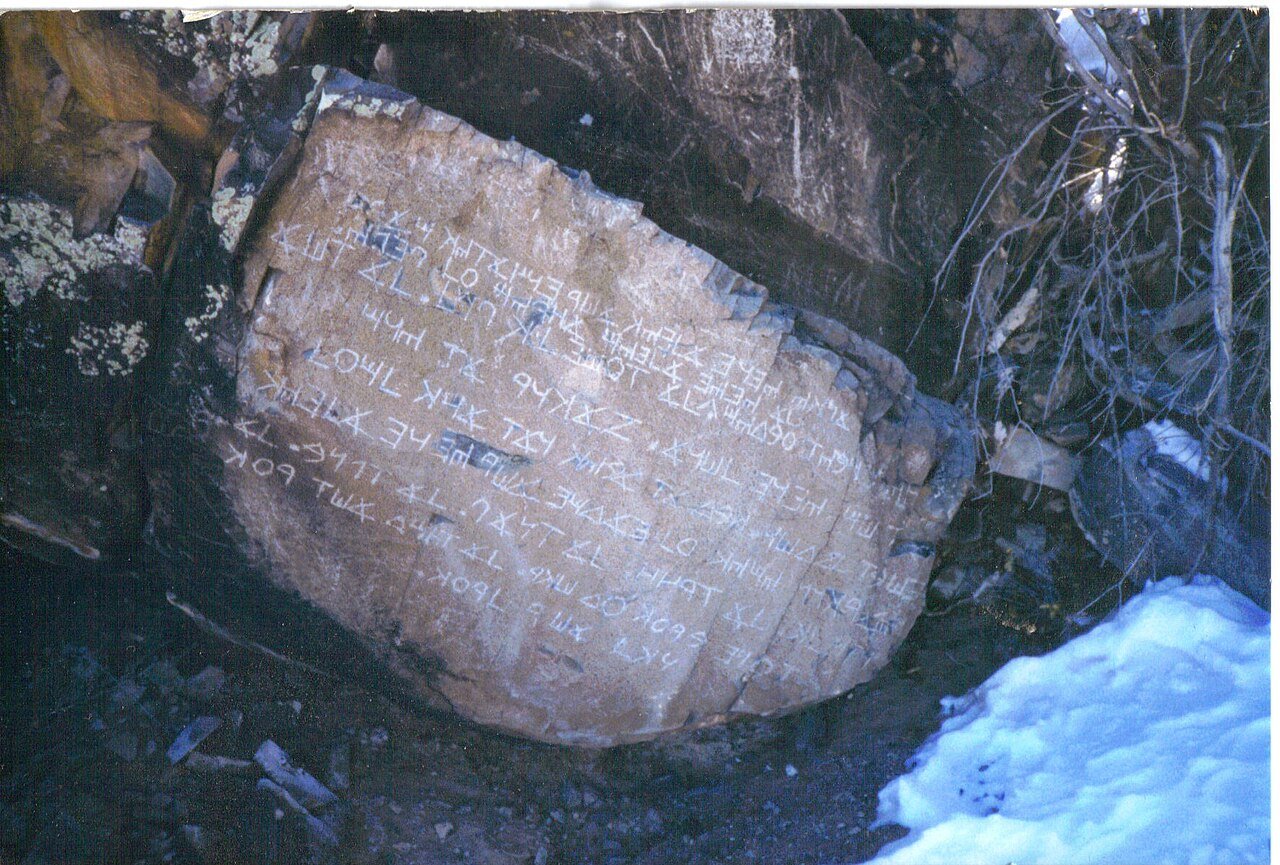
In 1996, Prof. James D. Tabor of the Dept. of Religious Studies, University of North Carolina – Charlotte, interviewed the late Professor Frank Hibben (1910-2002), a retired University of New Mexico archaeologist, “who is convinced that the inscription is ancient and thus authentic. He reports that he first saw the text in 1933. At the time it was covered with lichen and patination and was hardly visible. He was taken to the site by a guide who had seen it as a boy, back in the 1880s.” (Tabor 1997) At present the inscription itself is badly chalked and scrubbed up. However, Moorehouse compares the surviving weathering on the inscription to that on a nearby modern graffito dating itself to 1930. He concludes that the Decalogue inscription is clearly many times older than this graffito, and that 500 to 2000 years would not be an unreasonable estimate of its age.
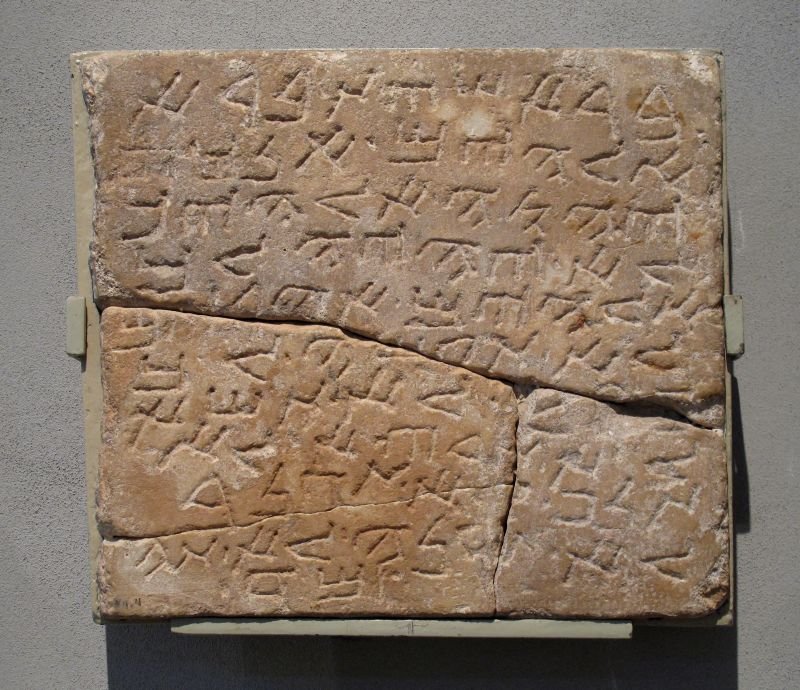
Epigraphically, the stone offers a sophisticated linguistic blueprint that rules out a 19th- or 20th-century forgery as well, demonstrated by renowned archaeolinguist Cyrus Gordon. Rather than using standard modern square Hebrew, the inscription is an abridged version of the Ten Commandments written in a unique variant of Paleo-Hebrew interspersed with distinct Greek letter choices. Gordon identified the monument as an ancient Samaritan mezuzah—which, unlike tiny Jewish doorway scrolls, were massive stone slabs bearing the Decalogue placed at property gateways or places of worship. Crucially, the inscription incorporates specific Greek character choices (such as tau, zeta, delta, and a reversed kappa in place of their Semitic counterparts) alongside Samaritan letterforms for yodh, qoph, and shin. This exact orthographic blending perfectly reflects the linguistic synthesis of Mediterranean Samaritan maritime traders operating during the Byzantine period (circa 4th to 6th century CE), a highly specialized historical convergence unknown to 19th-century scholars who would have otherwise fabricated the text using traditional Biblical Hebrew.
Gordon points out that prosperous Samaritan shipowners were known to live in Greek communities at the time of Theodosius I circa 390 A.D., and proposes that the most likely age of the Los Lunas inscription is the Byzantine period.
Further evidence of a Hellenistic or Byzantine influence on Los Lunas is provided by Skupin (1989). He analyzes the orthographic errors of the Los Lunas text itself, and concludes that it appears to have been written by a person whose primary language was Greek, who had a secondary, but verbal, comprehension of Hebrew. He writes of the inscriber,
He used the consonant [aleph] as if it were a vowel, like the Greek alpha, even though this clashes with the Hebrew orthographic system …. He confounded [qoph] and [caph] as a Philhellene who only knew kappa might do, and was sufficiently removed from Hebrew to be unaware that he had made an irreverent slip thereby. Most amazingly, he ‘heard’ macrons, the drawling long vowels that are structurally and semantically important in Greek … and felt compelled to indicate them even if he was not exactly sure of how it’s done (and rightly so, since in Hebrew they’re insignificant)…. His word order suggests a scriptural tradition related to a Greek version produced in Alexandria, Egypt, as does his spelling; and finally, he gives inordinate prominence to the words ‘brought you out of Egypt.’
Skupin concludes,
None of this proves anything. Until confirmation comes from another quarter, all we can really do is provide a clearer idea of the stone’s contents for those who are intrigued by it, and give those who reject the inscription’s authenticity … a deeper appreciation of what they have rejected.
An intriguing video discussing the physical analysis of ancient Hebrew inscriptions in North America is Hebrew Decalogue Stone Authenticated by America Unearthed. This clip features forensic geologist Scott Wolter examining similar controversial Hebrew artifacts from an independent geological perspective.