


ZIONNATION · A Movement to Build Zion
Arise and Build
Three spiritual callings, three temporal works, and one community of neighbors who refuse to wait for someone else to build the future.
What ZIONNATION Represents
Zion is not only a place we hope to find. It is a people we choose to become, and a community we can begin building this week.
For generations, believers have looked toward Zion as a refuge from the storm: a people of one heart and one mind, with no poor among them, standing for God, family and freedom when the world around them loses its footing. Many of us were raised on that hope. Too often we treated it as something that would simply arrive one day, finished and handed to us. ZIONNATION exists because we believe the opposite is true. Zion is built, and it is built by ordinary people, in ordinary neighborhoods, who decide to start.
ZIONNATION is a Christian, freedom-centered movement for families, neighbors and congregations of every denomination who want to help build that kind of people. Our current site says it plainly: ZionNation is where we stop dreaming about Zion and start building it, internally and externally. Zion begins in you, and everyone has something to offer.
And the Lord called his people Zion, because they were of one heart and one mind, and dwelt in righteousness; and there was no poor among them.
Moses 7:18
The movement rests on a simple idea: a free people needs both spiritual strength and temporal strength. Prayer without preparation leaves families exposed. Preparation without prayer turns into fear. Politics without vision turns into anger, and protection without faith turns into suspicion. So ZIONNATION organizes its work into six areas, three that face heavenward and three that face the world we live in, and binds all six together with the thing that matters most: community.
We are not asking anyone to leave their church or adopt a new creed. We are asking you to bring the faith you already have into a shared work with other believers who love God, love this country, and want their children to inherit a future worth living in.
An honest word about what exists today
ZIONNATION is a young movement, and this is a first draft of its larger vision. Some things are live; many are still being built. Throughout this page you will see three labels:
Live now
Pages you can visit today, such as the ZIONNATION Success Roadmap and Join Us page, plus trusted outside resources.
Being built
Groups, guides and pages in active planning. Their buttons lead to the Help Launch section on this page.
Proposed
Larger ideas, like a new party or a financial research partnership, that need founders, counsel and willing partners first.
Six Areas, One Community
Three spiritual callings lift us toward God. Three temporal works ground us in the real world. Community is the bridge that makes them one movement.
You do not need to do all six. Most people find one area that stirs something in them and start there. A grandmother who prays faithfully, a young father who learns ham radio, a retired teacher who runs a neighborhood conversation table, a business owner who moves her savings to a local credit union: each one is building Zion. The movement becomes strong when those people find each other.
Spiritual calling · 1 of 6
Prayer
Prayer changes things. Everything we build begins on our knees.
The purpose
Prayer is the first work of ZIONNATION because it is the first principle of action. Before a family stores a single can of wheat or a neighbor knocks on a single door, someone has to ask God for direction, for courage and for one another. Our prayer work gathers believers into steady, faithful rhythms of prayer for their families, their congregations, their cities and their country.
Why it matters
We believe faith is a real force. Scripture teaches that faith is “the substance of things hoped for, the evidence of things not seen,” and Jesus taught His disciples to pray believing. In the ZIONNATION way of seeing things, prayer is how a people first sculpts its future: we picture, in faith, the world God wants for our children, we ask for it, and then we rise and work toward it. Some people call that pattern a law of attraction. We call it faith in action, and we hold it as a conviction of faith rather than a formula or a scientific promise. God answers in His own way and His own time. Our part is to ask, to listen, and to move.
The effectual fervent prayer of a righteous man availeth much.
James 5:16 (KJV)
Prayer also does something quieter. People who pray together every week come to know whose son is deployed, whose business is struggling, whose mother is ill. A prayer circle is often the first real community a person finds, and community is the foundation for everything else here.
How to start
- Commit to one set time each week to pray for your family, neighborhood and nation.
- Pray by name for three neighbors, your local leaders and your congregation.
- Invite one friend to pray with you, in person or by phone.
- Keep a simple prayer journal so you can see how prayers are answered over time.
How to lead or help build
- Become a weekly Prayer Warrior and help us form the first circles.
- Host a small prayer group in your home, chapel or workplace break room.
- Offer to coordinate a shared weekly prayer focus across several groups.
- Help write a short leader guide for new prayer circle hosts.
Status: Prayer Warriors Being built
ZIONNATION prayer meetings and Prayer Warrior groups are being formed now. Lead your own circle or join one as groups open; until a dedicated page is live, start today and raise your hand through the Help Launch section below.
Spiritual calling · 2 of 6
Preaching
Share the hope that is in you, on the street, at a booth, and above all next door.
The purpose
Preaching in ZIONNATION means sharing the hope of Christ and the principles of a free people in a way that people can actually hear. Some of that will happen publicly: on the street, at fairs, farmers markets and community events, or at a simple tent-and-table booth that invites passersby to sit down and talk. Many Americans have seen that open-table, “come and talk with us” format at campus events run by various groups. ZIONNATION is not affiliated with any of them, but the format works, and we can learn from it.
Most importantly, though, preaching happens next door. Connect with your neighbors and your community: your ward, your stake, your parish, your congregation, your city. A sermon from a stranger is easy to forget. A neighbor who shows up with dinner when the baby is born, and who later shares why his faith matters to him, is not.
Why it matters
We hold a conviction that runs through this whole movement: the war of the sword can only be prevented by an effective war of words and ideas. We offer that as a guiding principle and a hope, not as a guarantee. History is full of societies that stopped persuading and slid toward force. When good ideas are shared with conviction and kindness, minds change and conflict can be met with conversation first.
Be ready always to give an answer to every man that asketh you a reason of the hope that is in you with meekness and fear.
1 Peter 3:15 (KJV)
Notice the words meekness and fear. Our preaching serves; it does not harass. We listen as much as we speak. We respect people who say no. We follow local rules for permits, public spaces and private property, and we never block anyone’s path or shout anyone down.
How to start
- Learn the names of ten neighbors this month, and pray for them by name.
- Write a two-minute personal answer to “Why does your faith matter to you?”
- Practice listening: ask three good questions before sharing your own view.
- Volunteer in your congregation’s outreach or service efforts.
How to lead or help build
- Form a small preacher group of two to six people who meet, pray and go out together.
- Organize a booth at a fair, market or community event, with permission and a permit where required.
- Host a neighborhood “faith and freedom” evening in a home or chapel.
- Help create a conversation guide on respectful dialogue and lawful outreach.
Status: preacher groups and booths Being built
Preacher groups, booth kits and conversation training are planned. The first groups will be formed by people who step forward now.
Spiritual calling · 3 of 6
Prophecy
If you are not envisioning the future, someone else’s vision will win.
The purpose
The future is created by visionary individuals and groups working toward an end. That has always been true. The prophets did not only warn; they described a world worth building, a holy city, a peaceable kingdom, swords beaten into plowshares, and they called people to live toward it. ZIONNATION’s prophecy work is about recovering that kind of vision: a Christian, freedom-promoting picture of the future that is clear enough to inspire families, congregations and communities to build it.
Where there is no vision, the people perish.
Proverbs 29:18 (KJV)
Why it matters
Other people are following their own prophecies right now. Violent jihadist groups such as ISIS openly framed their campaigns in apocalyptic, end-times terms, even naming their propaganda magazine after Dabiq, a town that appears in an end-times prophecy. Some occult and Satanist movements describe their own dark vision of what is coming. Those movements do not represent the faith of our Muslim, Jewish or other neighbors, and our answer to them is never hatred of whole peoples. Our answer is a better vision, lived out more faithfully. We believe that only by focusing on our own Christian, freedom-promoting visionaries, and by actually building what they describe, can we keep coercive visions of the future from winning.
Discernment, not fear
Prophecy in ZIONNATION is a work of faith and discernment. We study scripture and the inspired voices of our traditions, and we share our personal interpretations as interpretations, clearly separated from established facts. We do not set dates. We do not sell fear. “Of that day and hour knoweth no man” (Matthew 24:36), and “God hath not given us the spirit of fear; but of power, and of love, and of a sound mind” (2 Timothy 1:7).
Our earlier article, “On the Protection of Zion”, models this: it gathers prophetic voices about the Rocky Mountain West, notes plainly where a prophecy’s authenticity is disputed, and turns vision into practical work such as storehouses, radio networks and reception plans.
- Step 1Pray for a vision of what God would have your family and community become.
- Step 2Write it down plainly, so others can read it and run with it.
- Step 3Share it with others who will refine it and help carry it.
- Step 4Build it through the temporal work of the next three areas.
“Write the vision, and make it plain upon tables, that he may run that readeth it.” (Habakkuk 2:2)
How to start
- Write one page describing the community you hope your grandchildren will live in.
- Study the prophetic promises about Zion in your own scriptures and tradition.
- Learn to separate what a text actually says from what people claim it says.
- Turn one part of your vision into a concrete goal for this year.
How to lead or help build
- Host a vision circle where families share and refine their written visions.
- Help compile a well-sourced study guide on Zion and prophecy across Christian traditions.
- Write, film or illustrate hopeful stories of the future we want to build.
- Connect visionaries with the builders in Politics, Preparedness and Protection.
From the Prayer Closet to the Public Square
The three spiritual callings give us the why: a living relationship with God, a message worth sharing, and a vision worth building. The three temporal works give us the how. A movement that only prays can be overrun; a movement that only plans can lose its soul. Zion needs both, joined by neighbors who trust each other.
Temporal work · 4 of 6
Politics
A free people must govern itself, or someone else will.
The purpose
The Constitution was not written to run itself. It depends on citizens who vote, serve, organize, run for office and hold their leaders accountable. ZIONNATION’s political work is about rebuilding that citizen muscle in our neighborhoods and states, peacefully, lawfully and with conviction, as a force for hope, stability and good.
And seek the peace of the city whither I have caused you to be carried away captives, and pray unto the LORD for it: for in the peace thereof shall ye have peace.
Jeremiah 29:7 (KJV)
A new party: the Constitutional Independent Party Proposed
Many believers feel politically homeless. We propose to help build a new home: the Constitutional Independent Party, devoted to constitutional government, liberty of conscience, strong families and local self-reliance. This party does not exist yet. It needs founders, organizers, volunteers who understand their state’s ballot-access laws, and eventually candidates.
We also hope to explore a partnership with the American Independent Party, which is listed by the California Secretary of State as a qualified political party in California. To be clear: no partnership, endorsement or affiliation exists today. Exploring one respectfully, and building the new party lawfully, is part of the work we are inviting you into.
A peaceful civic corps Proposed
We are also proposing a Constitutional Civic Corps (an alternative working name is the Civic Service Corps): a body of trained, peaceful citizens who answer destructive coercion with lawful, constructive civic action. We are concerned that some protest activity in America is professionally organized and well funded, and that at times it crosses from protest into intimidation or disorder. Organizing and protesting are rights that belong to every American, including people we disagree with. Violence, vandalism and intimidation are not. The Civic Corps exists to out-organize disorder with hope, not to silence anyone.
| The Civic Corps will | The Civic Corps will never |
|---|---|
| Fight ideas with better ideas, in public and in good faith | Harass, dox, threaten or shout down opponents |
| Fill school boards, city councils, caucuses and committees | Disrupt lawful meetings or lawful protests |
| Recruit poll workers and observers through official channels | Use any form of electoral trickery or voter intimidation |
| Organize neighborhoods to help in a crisis | Target any group because of race, religion or origin |
| Document unlawful violence and report it to police | Confront, detain or retaliate against anyone |
How to start
- Confirm your voter registration and learn your precinct through your state or local election office.
- Attend one city council, county or school board meeting this quarter.
- Read the Constitution with your family, one article at a time.
- Ask your election office about serving as a poll worker.
How to lead or help build
- Join the founding circle of the Constitutional Independent Party.
- Research your state’s rules for forming a party and gaining ballot access.
- Help draft a Civic Corps code of conduct and training outline.
- Consider running for a local board, council or precinct office yourself.
Temporal work · 5 of 6
Preparedness
If ye are prepared ye shall not fear, and the best preparation is your community.
The purpose
Preparedness means preparing financially as well as with supplies of food, water, energy and medical goods. But don’t go crazy, and don’t go solo. A garage full of supplies cannot replace a neighborhood of people who know each other, have a plan, and can talk when the phones are down. ZIONNATION’s preparedness work builds emergency preparedness groups and systems so that when environmental, economic or political emergencies come, more of us are ready and all of us fare better.
Why it matters
Every serious emergency teaches the same lesson: people survive and recover together, and the prepared household becomes a blessing to its neighbors instead of a burden. Home storage, care for the widow and the stranger, and common sense all point the same way: “if ye are prepared ye shall not fear.”
Six practical tracks
1. Supplies: food, water, energy and medicine
Start with a 72-hour kit and a few weeks of the food you already eat, then build steadily. The Ready.gov kit list and the Emergency Preparedness topic from the Church of Jesus Christ of Latter-day Saints are good, sober starting points.
2. Backup power: batteries and solar
We plan to offer how-to guides on backup battery and solar systems, from a small portable power station to a home system. Anything wired into a house should be designed and installed by a qualified, licensed electrician, following local code and permits. Study the basics at Ready.gov on power outages and OSHA’s electrical safety guidance.
3. Financial preparedness: invest locally
Build an emergency fund, stay out of debt, and keep more of your money working close to home. Credit unions are member-owned, and you can find one with the NCUA credit union locator. Where properly registered local or regional investment funds exist, consider them, but study fees, risks and liquidity, check the people involved on Investor.gov and FINRA, and talk with a licensed advisor. Investing always carries risk, and local funds can be less diversified. See also Ready.gov on financial preparedness.
4. Communications: ham radio and real groups
When cell towers and internet fail, radio remains. Get your FCC amateur license (start with ARRL’s licensing guide), join a local net, and consider ARES or radio email through Winlink. Also join community messaging groups on apps such as Telegram or GroupMe. Having an account is not enough; you need to be part of active groups. No platform is uncensorable or unhackable, so use more than one channel, and keep a paper contact list.
5. Data: backups and a local server
If online services are disrupted, censored or simply go down, your family records, photos, scriptures, manuals and contacts should still be in your hands. Follow the 3-2-1 habit: three copies, on two kinds of media, one stored away from home. A small local server or network drive can hold shared community resources. Encrypt sensitive files, and practice a restore drill so you know the backup actually works.
6. Church partnerships across the region
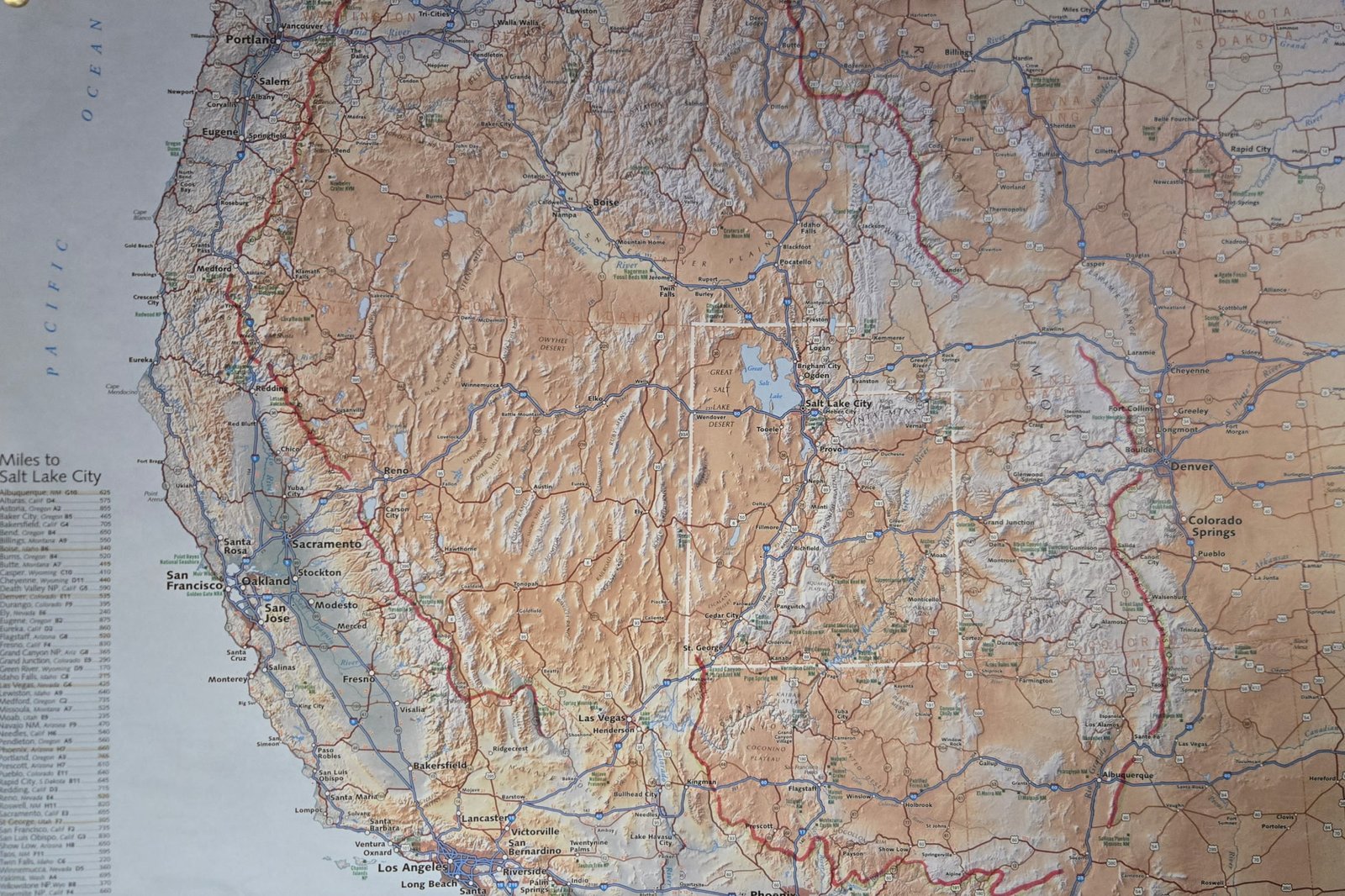
We hope Christian churches will partner with congregations throughout the Intermountain region, especially within the Zion’s Boundaries mapped in our earlier article, to share solar power, community gardens, storage space, training and volunteers. Shared resources and relationships built in calm times become lifelines in hard ones. Trained volunteers can also join a local CERT team or take Red Cross first aid classes.
How to start
- Build a 72-hour kit for each person in your home.
- Store two weeks of water and a few weeks of everyday food.
- Open or strengthen a credit union account and start an emergency fund.
- Back up your important files to an offline drive this week.
- Join one active local communication group, and check in.
How to lead or help build
- Start a neighborhood preparedness circle that meets monthly.
- Help write our battery, solar and offline backup how-to guides.
- Organize a ham radio study group and a weekly local check-in net.
- Introduce your pastor or bishop to a congregation in another town.
- Map gardens, solar, storage and skills your congregations could share.
Temporal work · 6 of 6
Protection
Guard what we love, lawfully, responsibly and in the light.
The purpose
Every family has a duty to protect the people and freedoms entrusted to it. Our protection work turns that duty into lawful community action, and extends it to a frontier many overlook: financial freedom.
Be not ye afraid of them: remember the Lord, which is great and terrible, and fight for your brethren, your sons, and your daughters, your wives, and your houses.
Nehemiah 4:14 (KJV)
The Community Protection & Service Corps Proposed
We are proposing a Community Protection & Service Corps as the neighborhood-level expression of the Zion Protection Corps charter in “On the Protection of Zion”, which describes a planning and preparedness fellowship, not a private army. The Corps would bring together responsible gun clubs, citizen neighborhood watch groups and community protection groups around a shared standard: lawful safety, de-escalation, first aid, secure storage and civilian accountability. It supports police, sheriffs and emergency managers. It never replaces them.
- ObserveNotice what is happening, calmly and accurately.
- ReportCall the proper authorities. Report; do not pursue.
- De-escalateLower the temperature with words and distance.
- AidGive first aid and care for anyone who is hurt.
What the Corps would build
- Neighborhood watch groups connected to local law enforcement, using resources such as National Neighborhood Watch.
- Responsible firearms clubs focused on lawful ownership, range safety and secure storage, with resources like Project ChildSafe.
- Trauma first aid skills through Stop the Bleed and similar training.
- Members who know their state’s laws and stay inside them.
What it will never be
- A militia, private army or paramilitary force.
- Self-appointed patrols, roadblocks or enforcement.
- Vigilantes who chase, detain or punish anyone.
- A group that singles out anyone for race, faith or accent.
White papers and a planning game Being built
Before any chapter forms, we plan to develop white papers with qualified attorneys on how neighborhood watch groups, gun clubs and protection groups can operate legally and responsibly in each state. These papers do not exist yet, and nothing on this page is legal advice.
We also envision a community emergency planning game: a strategy simulation where players practice evacuations, shelter logistics, supply routes, reception of refugees and keeping communications alive when the grid goes dark, much like the scenarios in our earlier article. It is a tool for planners and families to practice thinking ahead, not a combat or tactics trainer.
Protecting financial freedom Proposed research
Freedom can be lost through the purse as surely as through force. Scripture warns of a day when “no man might buy or sell” except by permission (Revelation 13:17). Many believers, including us, read that as a warning about a possible future global system of financial control. That is a matter of interpretation and faith, not a proven forecast, and we hold it soberly. But history leaves no doubt that governments can and do use money as a means of control, and it is wise to study how.
A research agenda: how 20th-century regimes controlled money
We propose a careful, well-sourced research project on how regimes associated with Hitler, Mussolini, Lenin, Stalin and Mao used financial control and financial repression as they took and held power. These were different regimes with different ideologies, economies and histories, and the research should treat them that way, not lump them together. Questions to study include:
- How property was confiscated or transferred from targeted groups, such as the Nazi “Aryanization” of Jewish-owned businesses (see the U.S. Holocaust Memorial Museum’s Holocaust Encyclopedia).
- How banks were nationalized or brought under state direction, and how quickly.
- How exit taxes, currency controls and capital controls kept people and wealth from leaving.
- How collectivization, land seizure and propaganda campaigns stripped families of savings.
- What early warning signs appeared, and which institutions resisted or failed.
Every claim in this research should come from reputable historians and archives, with sources cited. The goal is wisdom and vigilance, not alarm.
An Indigenous-led financial resilience partnership Proposed research
Tribal nations are sovereign governments, and Native communities already build their own financial tools, including Native community development financial institutions supported in part by the U.S. Treasury’s CDFI Fund Native initiatives. We believe financial institutions and investment services connected to tribal sovereignty could become an important part of a more resilient, more private and more locally governed financial future, and we want to explore that respectfully with Native partners.
This would only work as an Indigenous-led partnership, on tribal terms. Any project would need:
- Tribal consent and governance, through tribal councils and institutions, with benefits flowing to tribal members.
- Full legal compliance, including banking regulation, anti-money-laundering rules, tax law and securities law. Sovereignty is not a loophole and does not exempt anyone from these.
- Honest promises: no institution can guarantee immunity from federal systems, and we will not claim one can.
- Qualified counsel in federal Indian law, banking and securities before anything is offered to anyone.
The first step is listening: learning from Native leaders and organizations such as the National Congress of American Indians and Native CDFIs, and asking whether, and how, they would want to partner.
Preparedness or protection? Where financial freedom fits
Financial preparedness is personal and practical: an emergency fund, less debt, savings in local credit unions, wise local investing. Financial protection is structural and long-term: studying how freedom is lost through money, and building lawful institutions and partnerships that keep economic freedom alive for whole communities. Every family should do the first. The second needs researchers, attorneys and partners.
Help Launch ZIONNATION
Most of what you have read is being built right now. Here is what is coming, and how founders can help shape it.
Each of the six areas will eventually have its own page on zion-nation.com, with groups to join, guides, courses and member resources. Until those pages are live, this section is the honest landing place for every “help launch” button above. Today, the best way to raise your hand is through the ZIONNATION Join Us page, and then by starting the first step in your own home and neighborhood.
Prayer Warriors Being built
- Weekly prayer meeting schedule and shared prayer focus
- Prayer circle leader guide
- A directory of existing Prayer Warrior groups
Preacher Groups & Booths Being built
- Conversation and respectful-dialogue training
- Booth kit guide, including permits and etiquette
- Neighbor outreach ideas for wards, stakes, parishes and cities
Vision Circles Being built
- A guided family and community vision workshop
- A sourced study guide on Zion and prophecy
- Stories, art and media about the future we are building
Party & Civic Corps Proposed
- Founding circle for the Constitutional Independent Party
- State-by-state ballot access research
- Constitutional Civic Corps code of conduct and training
Preparedness Circles Being built
- Battery, solar and offline backup how-to guides
- Ham radio study groups and local check-in nets
- Church-to-church partnership guide for the Intermountain region
Protection & Service Corps Proposed
- Attorney-reviewed white papers, state by state
- Chapter standards for watch groups and gun clubs
- The community emergency planning game
Research Teams Proposed
- Historical study of financial control under 20th-century regimes
- Listening-first outreach toward an Indigenous-led finance partnership
- Volunteers with legal, financial or historical training especially welcome
Membership & Courses Being built
- Future member resources across all six areas
- Courses and guides as each area grows
- Already live: the ZIONNATION Success Roadmap
Choose Your First Step
You do not have to build Zion alone, and you do not have to build it all at once. Pick one commitment. Write it down. Tell someone.
Pray
- I will pray every week for my family, neighbors and nation.
- I will invite one person to pray with me.
Reach out
- I will learn the names of ten neighbors.
- I will share my faith kindly with one of them.
Envision
- I will write one page about the future I want to build.
- I will share it with my family.
Show up
- I will attend one local public meeting this quarter.
- I will check my voter registration.
Get ready
- I will build a 72-hour kit and back up my files.
- I will join one active local group.
Stand watch
- I will take a first aid or Stop the Bleed class.
- I will store any firearms securely.
Ready to do more?
Start a group of your own. A prayer circle, a preacher group, a vision circle, a civic study group, a preparedness circle or a neighborhood watch can begin with two or three families in a living room. When you start one, you are a founder of this movement. Then tell us through the Help Launch section so we can connect you with others.
This is a draft vision document. Programs marked “being built” or “proposed” are not yet operating. ZIONNATION is not affiliated with, or endorsed by, any political party, campus organization, tribal nation or financial institution mentioned here. Nothing on this page is legal, financial or investment advice; consult qualified professionals. All ZIONNATION activities are intended to be peaceful and lawful, and to support, never replace, lawful civil authority. Illustrations are original artwork; the Zion’s Boundaries map comes from our earlier article.