Islam and the Book of Mormon
“For out of Zion the law shall go forth, and the word of the LORD from Jerusalem” (Isa 2:3)
The following concept came to me in a strong dream. That I was to preach this at some point, of how the LORD will use Islam in the Latter-days. The Book of Mormon IS FOR ISLAM–just as it is for the seed of the Lamanites in America, it foreshadows their destiny.
The Lion and the Lamb: The Book of Mormon as a Typology for the Modern Clash of Civilizations — Islam vs. Christianity
The Book of Mormon identifies itself primarily as a record written for the “Lamanites,” a remnant of the House of Israel, to be brought forth in the latter days. However, scholars and theologians of the faith have long noted that its narratives serve as “types” or “shadows”—prophetic blueprints for the challenges facing the global House of Israel before the Second Coming. When examining the geopolitical and spiritual landscape of the 21st century, a compelling parallel emerges: the millennia-long struggle between the Nephites and Lamanites serves as a divine foreshadowing of the modern tension between the Christian West and the Islamic world.
The Nephites and Lamanites: A Mirror of Modernity
In this typological framework, the Nephites represent the Christian tradition—a people who were given the “plain and precious” truths of the Gospel, built a civilization based on those covenants, but who often fell into the traps of materialism, pride, and spiritual apathy. Conversely, the Lamanites mirror the historical and spiritual trajectory of Islam. Both groups are descendants of Abrahamic lineages (the Lamanites through Lehi/Joseph; Islam largely through Ishmael) who felt dispossessed of their birthright and spent centuries in a state of perceived grievance against their “brethren.”
The Book of Mormon explicitly states that the Lord uses the Lamanites as a “scourge” to keep the Nephites in remembrance of their God. As recorded in 2 Nephi 5:25:
“And the Lord God said unto me: They shall be a scourge unto thy seed, to stir them up in remembrance of me; and inasmuch as they will not remember me, and hearken unto my words, they shall scourge them even unto destruction.” (2 Nephi 5:25)
This mirrors the contemporary view that the rise of global Islamic movements acts as a catalyst for a secularized Christian world to re-evaluate its own faith and moral foundations. When the Nephites turned from their covenants, the Lamanites were the instrument of their awakening.
The “Lion Among the Sheep”: A Shared Prophecy
One of the most striking links is the Book of Mormon’s repeated citation of Micah’s prophecy regarding the House of Israel in the last days. In both 3 Nephi 20:16 and 3 Nephi 21:12, Jesus Christ quotes the Old Testament, stating that the remnant of Jacob shall be:
15 And I say unto you, that if the Gentiles do not repent after the blessing which they shall receive, after they have scattered my people—
16 Then shall ye, who are a remnant of the house of Jacob, go forth among them; and ye shall be in the midst of them who shall be many; and ye shall be among them as a lion among the beasts of the forest, and as a young lion among the flocks of sheep, who, if he goeth through both treadeth down and teareth in pieces, and none can deliver.
17 Thy hand shall be lifted up upon thine adversaries, and all thine enemies shall be cut off.
12 And my people who are a remnant of Jacob shall be among the Gentiles, yea, in the midst of them as a lion among the beasts of the forest, as a young lion among the flocks of sheep, who, if he go through both treadeth down and teareth in pieces, and none can deliver.
13 Their hand shall be lifted up upon their adversaries, and all their enemies shall be cut off. (3 Nephi 21:12)
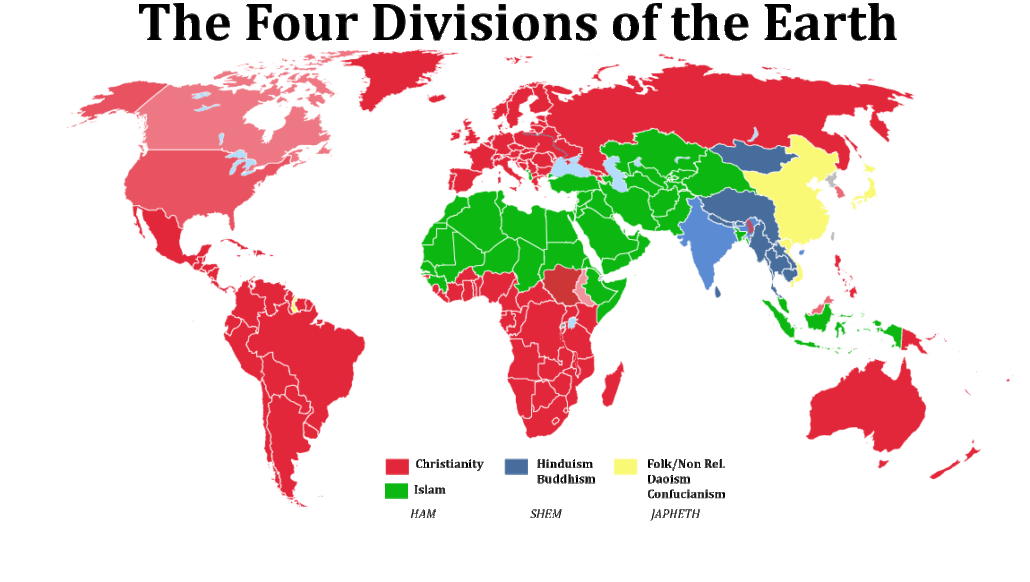
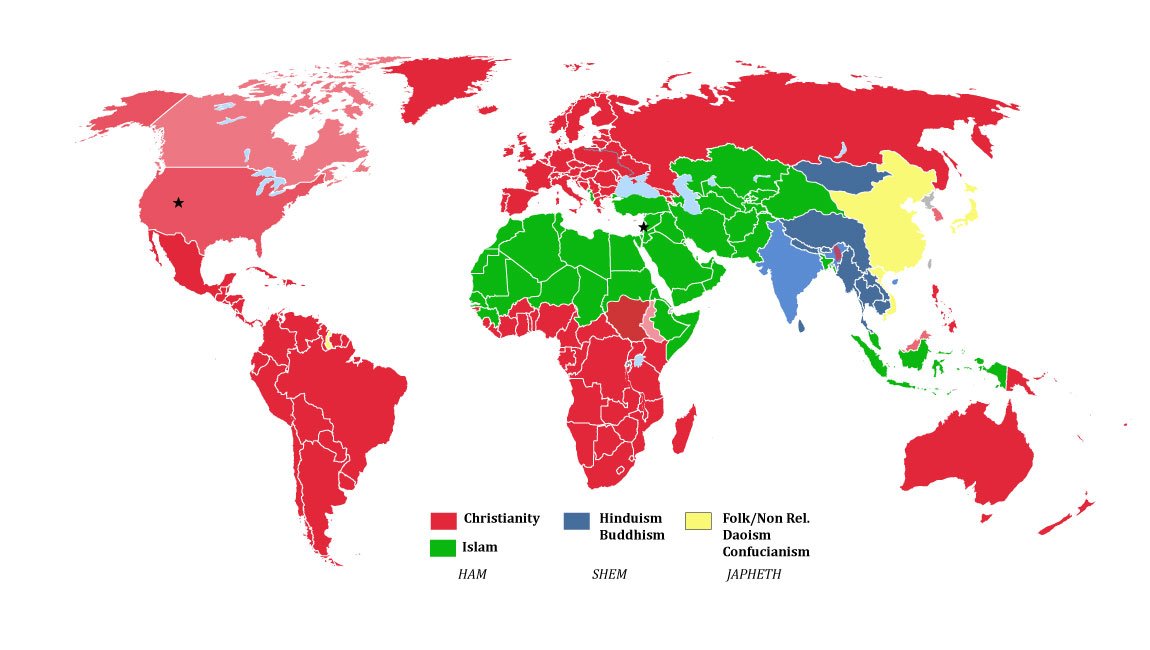
While this has traditionally been applied to the indigenous peoples of the Americas (the seed of Lehi) reclaiming their land, a global application suggests it also refers to the “Seed of Abraham” in the Old World. Today, the seed of Abraham is predominantly concentrated in Islamic nations. This “Lion” imagery suggests a period of intense, irresistible power where a once-subjugated people rise to prominence, acting as a force of judgment upon a Gentile world that has rejected its spiritual heritage.
The Book of Mormon suggests this is not mere random conflict, but a calculated divine stirring. Just as the Lamanites were “driven” to battle by their circumstances and God’s permissive will to humble the Nephites, the geopolitical shifts in the Middle East and the Islamic diaspora in the West can be seen as the “Lion” beginning to tread down the complacency of a post-Christian world.
From Scourge to Sanctification: The Great Conversion
The most hopeful element of this typology lies in the eventual spiritual reversal. The Book of Mormon is not a story of the perpetual wickedness of the Lamanites; rather, it is a story of their ultimate redemption. In several key instances, such as the mission of the sons of Mosiah or the era of Helaman, the Lamanites became more righteous than the Nephites.
Helaman 6:1 records this dramatic shift:
“And it came to pass that when the sixty and first year of the reign of the judges had ended… the Lamanites had become, the more part of them, a righteous people, insomuch that their righteousness did exceed that of the Nephites, because of their firmness and their steadiness in the faith.” (Hel 6:1)
This serves as a profound prophecy for the future of Islam. The Book of Mormon suggests that the very traits that make a people a formidable “scourge”—their “steadiness,” their refusal to compromise their identity, and their zeal—become their greatest strengths when they eventually embrace the fullness of the Gospel.
Just as the Lord “remembered” the Lamanites and restored them to their knowledge of their forefathers, the latter-day work involves a similar “remembering” of the Islamic world. The conflict described in the Book of Mormon suggests that the end-times friction between “Nephite-like” Christianity and “Lamanite-like” Islam will not end in mutual destruction, but in a massive spiritual harvest where the “Lion” finally finds peace with the “Lamb,” and the remnants of Abraham’s seed unite under a single Shepherd.
So even though the Book of Mormon specifically prophecies that it will the the Latin (and particularly indigenous Latin people in concert with the Saints or righteous remnant of the gentiles) who are given North America after the fall of the Great Gentile Nation (USA), in a broader sense it will be Islam and converted Muslims in concert with the remnant of Jews in Israel who are given Europe after the fall of the Gentiles on that continent.